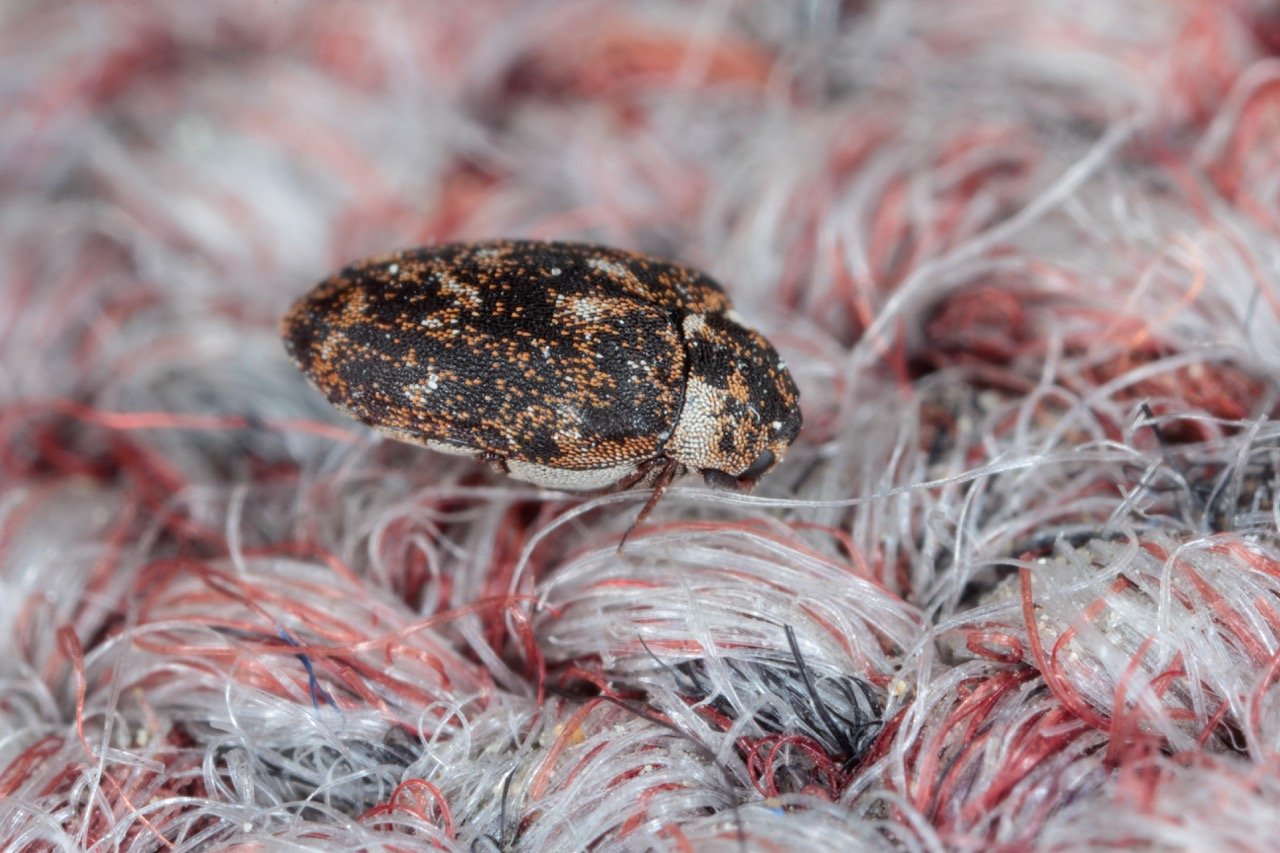
Have you noticed small, rounded beetles near your windows, on your carpets, or around stored clothing? You might be dealing with carpet beetles.
Although these insects are relatively small, they can become a frustrating problem when their larvae begin feeding on certain household materials.
Many Florida homeowners are surprised to discover that carpet beetles can appear even in clean, well-maintained homes.
But why are there carpet beetles in your home, and what can you do to prevent them?
Understanding what attracts these insects, where they hide, and how they develop can help you recognize potential problems before extensive damage occurs.
What Are Carpet Beetles?
Carpet beetles are small insects belonging to the family Dermestidae.
Several species can be found in residential environments, including varied carpet beetles and black carpet beetles.
Adult carpet beetles are generally small and may appear dark or display mottled patterns, depending on the species.
Their larvae look quite different.
Carpet beetle larvae are usually elongated and covered with fine hairs or bristles.
Unlike adults, which commonly feed on pollen and nectar outdoors, many carpet beetle larvae feed on animal-derived materials.
These may include wool, fur, feathers, and other substances containing proteins such as keratin.
This feeding behavior is why carpet beetles can damage certain household fabrics and stored belongings.
Why Are There Carpet Beetles in Your Home?
Carpet beetles may enter homes through open doors, windows, or other accessible openings.
Adult beetles can fly, allowing them to move between outdoor environments and indoor spaces.
They may also be introduced through infested materials, including secondhand furniture, rugs, or stored textiles.
Once indoors, suitable materials can provide food for developing larvae.
Carpet beetles do not necessarily indicate poor housekeeping.
Even a carefully maintained home may contain wool clothing, natural-fiber rugs, pet hair, or other materials that support larval development.
However, undisturbed areas and accumulated debris may make it easier for an infestation to remain unnoticed.
What Attracts Carpet Beetles?
Carpet beetles are associated with several conditions that can provide food or opportunities for reproduction.
Natural Fibers
Wool, silk, fur, feathers, and other animal-derived materials may provide food for certain carpet beetle larvae.
Not all fabrics are equally attractive.
Synthetic materials are generally less suitable as food unless they contain animal-derived residues or are blended with susceptible fibers.
Pet Hair and Animal Debris
Accumulated pet hair and other animal-derived debris may provide food for larvae in some environments.
These materials can collect beneath furniture, along baseboards, and in areas that receive limited cleaning.
Stored Clothing and Textiles
Clothing stored for long periods may become vulnerable if carpet beetles gain access.
Closets, storage boxes, and other protected spaces can allow larvae to develop without frequent disturbance.
Dead Insects and Other Organic Materials
Some carpet beetle larvae feed on dead insects and other animal-derived debris.
Accumulations in attics, wall voids, or inaccessible areas may support activity.
Access Through Windows and Doors
Adult carpet beetles may enter through open windows or damaged screens.
Because adults can be attracted to light, homeowners sometimes notice them near windowsills.
However, finding an adult beetle near a window does not necessarily mean an indoor infestation is established.
Where Do Carpet Beetles Hide in a House?
Carpet beetle larvae often remain in protected locations where food is available.
Common areas include:
- Beneath furniture and along carpet edges.
- Inside closets and clothing storage areas.
- Around natural-fiber rugs.
- Beneath upholstered furniture.
- Inside storage boxes containing susceptible textiles.
- Near accumulations of pet hair or dead insects.
The exact hiding places depend on the species and the available materials.
Because larvae may remain concealed, homeowners sometimes discover damage before noticing the insects themselves.
Are Carpet Beetles Common in Florida?
Carpet beetles can occur in Florida homes, as well as in many other parts of the United States.
Florida’s climate supports a variety of insects throughout the year, although indoor carpet beetle activity depends on more than outdoor temperature.
Suitable food sources, access points, and protected indoor environments all influence whether an infestation develops.
Carpet beetles can also persist indoors in climate-controlled buildings.
For this reason, homeowners should pay attention to signs of activity regardless of the season.
What Are the Signs of a Carpet Beetle Infestation?
Recognizing carpet beetle activity early may help reduce damage to vulnerable belongings.
Small Holes in Fabrics
Larvae may feed on susceptible materials, leaving irregular damage.
However, holes in clothing or rugs can have several causes, including clothes moths, ordinary wear, and other factors.
Damage alone is not enough to confirm carpet beetles.
Shed Larval Skins
As carpet beetle larvae grow, they shed their outer skins.
These empty skins may accumulate near feeding areas.
Finding them can be an important clue, particularly when they appear alongside damaged natural-fiber materials.
Live Larvae
Carpet beetle larvae are often more relevant to fabric damage than adult beetles.
They may be found beneath furniture, inside closets, or near stored textiles.
Adult Beetles Near Windows
Adult carpet beetles sometimes appear on windowsills or near indoor light sources.
An occasional adult does not necessarily indicate an established infestation, but repeated sightings may justify further inspection.
Can Carpet Beetles Damage Your Carpet?
Yes, certain carpet beetle larvae can damage carpets made from susceptible animal-derived fibers.
Wool carpets and rugs may be particularly vulnerable.
Damage often develops in areas that remain undisturbed, such as beneath furniture or along edges.
However, many modern carpets contain synthetic materials that are not suitable food sources for carpet beetle larvae.
The risk depends on the material and whether animal-derived residues are present.
If you notice unexplained damage, inspect the affected area for larvae and shed skins.
Can Carpet Beetles Damage Clothes?
Yes.
Carpet beetle larvae may feed on wool clothing, fur, feathers, and other susceptible materials.
Clothing stored for long periods can be vulnerable when insects gain access.
Damage may be discovered when seasonal garments are removed from storage.
To reduce risk, clean clothing before storing it and use suitable protective containers.
Regularly inspect items made from natural animal-derived fibers.
Do Carpet Beetles Eat Cotton?
Carpet beetle larvae primarily feed on animal-derived materials.
Clean cotton is not typically a preferred food source.
However, fabrics contaminated with food residue, body oils, or other organic substances may become more attractive to certain fabric pests.
Blended fabrics containing wool or other animal-derived fibers may also be vulnerable.
Correct identification is important before assuming carpet beetles caused damage to a particular item.
Are Carpet Beetles Dangerous to Humans?
Carpet beetles are not known for biting people.
They are primarily considered fabric and stored-material pests.
However, the hairs associated with carpet beetle larvae may cause skin irritation or allergic reactions in some individuals.
This irritation can sometimes be mistaken for insect bites.
Not every unexplained rash is related to carpet beetles.
If skin symptoms persist or become severe, consult a healthcare professional.
Do Carpet Beetles Live in Beds?
Carpet beetle larvae may occasionally be found around bedding, mattresses, or nearby furniture when suitable materials are present.
However, they do not behave like bed bugs.
Bed bugs feed on blood, while carpet beetle larvae feed primarily on certain organic materials.
Finding a small insect in a bedroom does not establish which pest is present.
Accurate identification is necessary because the management approaches differ.
Carpet Beetles vs. Bed Bugs: What’s the Difference?
Carpet beetles and bed bugs are different insects with different feeding behaviors.
Adult carpet beetles are beetles and may have rounded bodies with distinctive patterns.
Bed bugs are flattened insects that feed on blood.
Carpet beetle larvae are often hairy or bristly, while bed bug nymphs do not have the same appearance.
Carpet beetle damage is generally associated with susceptible materials rather than blood feeding.
If you are uncertain which insect you’ve found, professional identification can help prevent unnecessary or ineffective treatments.
Carpet Beetles vs. Clothes Moths
Both carpet beetles and clothes moths can damage certain natural-fiber materials.
However, they belong to different insect groups.
Clothes moth larvae and carpet beetle larvae have different appearances and behaviors.
The damage they cause may sometimes look similar.
This makes identifying the insect itself important.
A professional can help distinguish between these pests and recommend an appropriate approach.
How to Get Rid of Carpet Beetles in Your Home
Effective carpet beetle management begins with locating the source of the infestation.
Removing a few visible adult beetles may not address larvae developing elsewhere.
1. Vacuum Vulnerable Areas Thoroughly
Vacuum carpets, rugs, baseboards, furniture edges, and other accessible areas where debris may accumulate.
Pay attention to locations beneath furniture and along carpet edges.
Dispose of collected debris appropriately to reduce the chance of insects remaining in the vacuum.
2. Inspect Stored Clothing
Examine wool garments, blankets, and other susceptible materials.
Look for larvae, shed skins, and unexplained fabric damage.
Clean affected items according to their care instructions.
3. Store Vulnerable Fabrics Properly
Use clean, suitable storage containers for susceptible clothing and textiles.
Avoid storing dirty garments for extended periods.
Regular inspection is especially useful for valuable or rarely used items.
4. Remove Food Sources
Clean accumulated pet hair, lint, and other debris from accessible areas.
Investigate accumulations of dead insects where they can be safely reached.
If activity is associated with an inaccessible wall void or attic space, professional assistance may be necessary.
5. Inspect Windows and Screens
Repair damaged screens and address appropriate entry points.
Reducing access may help limit the number of adult beetles entering the property.
6. Seek Professional Pest Control When Necessary
Persistent activity may require a more detailed inspection.
A professional can help identify the species, locate likely development areas, and recommend an appropriate management strategy.
Can Vacuuming Eliminate Carpet Beetles?
Vacuuming can be an important part of carpet beetle management.
It may remove larvae, shed skins, and materials that provide food.
However, vacuuming alone may not eliminate an infestation when insects are developing inside inaccessible spaces or stored items.
The effectiveness of cleaning depends on whether the source has been identified and addressed.
Consistent maintenance can support prevention, but recurring activity may require additional investigation.
Should You Throw Away Infested Clothing?
Not necessarily.
Some affected items may be cleaned or treated using methods appropriate for the material.
The best approach depends on the fabric, the extent of damage, and the presence of insects.
Follow garment care instructions and consider professional textile cleaning for delicate or valuable belongings.
Severely damaged items may not be repairable, but disposal is not always required.
Can Carpet Beetles Come Back After Cleaning?
Yes, carpet beetle activity may return if larvae or suitable food sources remain.
For example, cleaning a visible rug may not address insects developing inside a nearby storage area.
Adult beetles may also enter the home again from outdoors.
This is why successful management focuses on identifying sources, cleaning vulnerable areas, and maintaining appropriate storage practices.
Do Home Remedies Work Against Carpet Beetles?
Homeowners sometimes try vinegar, essential oils, or other household substances to manage carpet beetles.
However, many popular remedies have limited evidence supporting their effectiveness for eliminating established infestations.
Some substances may also damage fabrics or create unnecessary exposure risks.
A more reliable approach involves accurate identification, thorough cleaning, removal of food sources, and appropriate professional guidance when necessary.
How to Prevent Carpet Beetles in Florida Homes
Prevention focuses on reducing suitable food sources and limiting opportunities for insects to remain undisturbed.
Regularly vacuum areas beneath furniture and around baseboards.
Inspect natural-fiber clothing before long-term storage.
Keep storage areas organized and use appropriate containers.
Maintain window screens and investigate recurring adult beetle sightings.
If you have pets, clean areas where hair accumulates.
These practices can help reduce conditions that support carpet beetle development.
When Should You Call a Pest Control Professional?
Consider professional assistance if you repeatedly find larvae, discover ongoing damage to fabrics, or cannot locate the source of the activity.
An inspection may be especially useful when several rooms are affected or when insects appear despite consistent cleaning.
A pest control professional can help distinguish carpet beetles from other household pests and recommend suitable control measures.
The goal is to address the source rather than repeatedly treating isolated sightings.
Protecting Your Home From Carpet Beetles
Finding carpet beetles in your home does not necessarily mean your property is dirty or poorly maintained.
These insects may enter through accessible openings or arrive in infested materials.
Their larvae can damage certain natural-fiber belongings when suitable food sources are available.
Recognizing early warning signs, maintaining clean storage areas, and protecting vulnerable fabrics can help reduce the risk of recurring problems.
When activity persists, professional identification and inspection can help determine the most effective next steps.
Contact 911 Home Helps Today
Are you finding carpet beetles, larvae, or unexplained fabric damage around your Florida home? 911 Home Helps can inspect your property, identify signs of pest activity, evaluate possible sources, and recommend an appropriate pest control and prevention strategy.