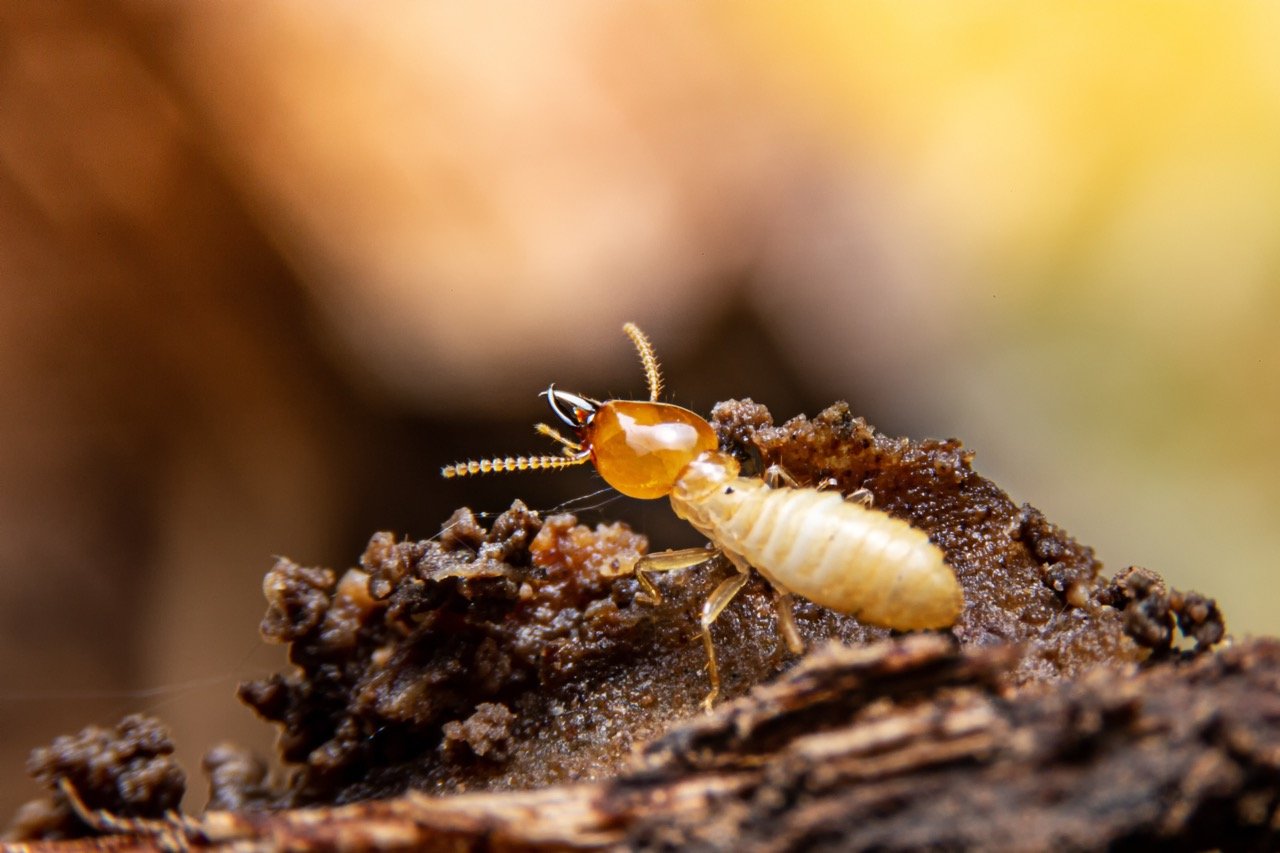
Finding evidence of termites in your home can raise a lot of questions.
Are they living inside the wood? Are they coming from the soil? Why are there tiny pellets near a window? And why does one homeowner discover mud tubes while another finds discarded wings?
The answers may depend on the type of termite involved.
When comparing drywood vs subterranean termites, one of the most important differences is how they live and access the wood they consume. These differences affect where activity may occur, what warning signs homeowners notice, and how a pest control professional evaluates the property.
Both types are relevant to Florida homeowners, but they should not be treated as interchangeable.
Understanding their basic characteristics can help you recognize suspicious activity and know when a professional termite inspection is appropriate.
What Are Drywood Termites?
Drywood termites establish colonies within wood and do not require direct contact with soil.
They may infest wooden materials in a structure, including certain framing components, trim, and furniture.
Because their colonies can remain concealed inside the wood, homeowners may not notice activity immediately.
In some cases, the first visible evidence is a small accumulation of termite pellets beneath an affected area.
Drywood termites can also produce winged reproductive termites, known as swarmers, that leave established colonies.
Finding swarmers or discarded wings indoors is a reason to investigate further.
What Are Subterranean Termites?
Subterranean termites typically live in soil and maintain access to the moisture they need.
They forage for cellulose-containing materials, including wood, and may travel between the soil and a structure through concealed routes.
One recognizable sign is the presence of mud tubes.
These tubes help termites move through exposed areas while maintaining a protected environment.
However, not every subterranean termite problem produces an obvious tube in a location the homeowner can easily see.
Activity may remain concealed behind walls, beneath flooring, or in other difficult-to-inspect areas.
Drywood vs. Subterranean Termites: Key Differences
Although both types consume cellulose, their habits and warning signs differ.
|
Feature |
Drywood Termites |
Subterranean Termites |
|---|---|---|
|
Typical colony location |
Within wood |
Generally associated with soil |
|
Direct soil contact |
Not required |
Typically maintained through soil-connected activity |
|
Moisture relationship |
Can obtain needed moisture from the wood they inhabit |
Depend on access to moisture |
|
Common visible evidence |
Dry fecal pellets, swarmers, discarded wings |
Mud tubes, swarmers, discarded wings |
|
Potential locations |
Structural wood, trim, furniture |
Wood and other cellulose materials accessible from foraging routes |
|
Inspection considerations |
Identifying affected wooden components |
Evaluating soil-connected access and structural conditions |
These are general distinctions. Actual evidence varies by species, property, and infestation.
A professional inspection is needed to identify the termite involved and evaluate the extent of activity.
Do Drywood and Subterranean Termites Cause the Same Damage?
Both can damage wooden materials by consuming cellulose.
However, the location and pattern of activity may differ.
Drywood termites can establish themselves within a piece of wood without needing a connection to the ground.
Subterranean termites generally access wood through their soil-connected foraging system.
This distinction matters because a homeowner may discover damage in very different parts of a property.
A damaged wooden component alone is not enough to identify the termite species.
Other insects, moisture, and deterioration can also affect wood.
Accurate identification should consider the surrounding evidence.
What Do Drywood Termite Droppings Look Like?
Drywood termites produce small, dry fecal pellets, commonly called frass.
These pellets may accumulate beneath tiny openings in infested wood.
Homeowners sometimes notice them near:
-
Window frames.
-
Baseboards.
-
Wooden trim.
-
Furniture.
-
Other wooden components.
The pellets may resemble fine grains or small particles, making them easy to mistake for ordinary debris.
If you find a recurring pile beneath a wooden surface, photograph it before cleaning.
The location and appearance may provide useful information during an inspection.
Do Subterranean Termites Leave Droppings?
Subterranean termites generally do not produce the same visible piles of dry pellets associated with drywood termites.
Instead, homeowners may notice other evidence, particularly mud tubes.
This is why searching only for termite droppings can miss an important category of termite activity.
A home may have subterranean termites without any visible pile of frass.
What Are Termite Mud Tubes?
Mud tubes are protective passageways constructed by subterranean termites.
They may appear on foundation walls or other surfaces connecting termite activity to a food source.
The tubes can resemble narrow lines or tunnels made from soil-like material.
Their appearance and location may vary.
If you find a suspicious tube, photograph it and arrange for identification rather than assuming it is harmless dirt.
Also, don’t assume that breaking a visible tube solves the underlying problem.
The termite colony and other concealed routes may remain.
Can Drywood Termites Build Mud Tubes?
Drywood termites do not typically create the soil-connected mud tubes associated with subterranean termites.
Their activity occurs within the wood they infest.
This makes visible pellets, swarmers, and changes in wooden materials particularly relevant when evaluating suspected drywood termite activity.
Still, no single sign should be used to make a definitive identification without examining the evidence.
Where Do Drywood Termites Enter a Home?
Drywood termite swarmers can reach suitable wooden materials and establish new colonies.
Potentially affected areas may include exposed or accessible wooden components.
Because drywood termites do not need a route from the soil, homeowners should not assume that a clean foundation or the absence of mud tubes rules out termite activity.
An inspection may need to consider wooden materials above ground level as well.
How Do Subterranean Termites Enter a House?
Subterranean termites may access structural materials through soil-connected routes.
Conditions such as wood-to-soil contact, concealed foundation areas, and moisture problems can complicate prevention and inspection.
Potential access isn’t always visible from outside.
Termites may travel through concealed spaces, making professional evaluation useful when warning signs appear.
Maintaining visible inspection areas around the structure can help homeowners notice changes sooner.
Which Type of Termite Is Found in Florida?
Florida has multiple termite species, including drywood and subterranean termites.
That means homeowners should avoid assuming that every termite sighting represents the same type of infestation.
The location of the activity, insect characteristics, and surrounding evidence all matter.
For example, finding pellets beneath a wooden window frame presents a different inspection question from discovering a mud tube along a foundation.
Both deserve attention, but the next steps may differ.
Do Both Types of Termites Swarm?
Yes.
Drywood and subterranean termites produce winged reproductive termites.
Swarming is part of their natural colony development.
However, swarming periods can vary depending on the termite species and environmental conditions.
Seeing winged insects around a light does not automatically confirm a termite infestation.
Flying ants can look similar to termite swarmers, so identification is important.
If possible, preserve a specimen and photograph the location where the insects appeared.
What If You Find Termite Wings Near a Window?
Discarded wings can be a useful warning sign.
Termite swarmers shed their wings after flight, and homeowners may find them near windows, doors, or other illuminated areas.
But the wings alone may not tell you which termite species is involved or where the colony is located.
Document the evidence and arrange an inspection if termites are suspected.
Finding wings indoors deserves particular attention because it may indicate activity associated with the structure.
Can Drywood Termites Infest Furniture?
Yes. Because drywood termites can establish colonies within wood, certain furniture and other wooden items may become affected.
This is one reason homeowners should inspect used wooden furniture before bringing it indoors.
Look for suspicious pellets, openings, and other signs of insect activity.
However, not every small hole in furniture is caused by termites.
Professional identification can help distinguish termite evidence from other wood-damaging insects.
Can Subterranean Termites Reach Wood Above Ground?
Yes.
Although subterranean termites are associated with soil, they may forage into wooden structural components above ground level.
They can use protected routes to reach food sources.
Therefore, activity found in an elevated part of the home does not automatically mean drywood termites are responsible.
The full pattern of evidence matters more than the height of one damaged area.
Does Moisture Matter More for Subterranean Termites?
Moisture is particularly important to subterranean termite biology.
Persistent moisture near a structure may contribute to conditions that deserve attention.
Homeowners should inspect for:
-
Plumbing leaks.
-
Poor drainage.
-
Irrigation directed toward the building.
-
Damp structural areas.
-
Water intrusion.
-
Wood-to-soil contact.
Drywood termites have different moisture requirements, so removing a visible moisture problem is not a complete termite-prevention strategy for every species.
Good property maintenance remains useful, but it cannot replace inspection when termite evidence is present.
Can You Identify the Type of Termite by the Damage?
Not reliably from damage alone.
Different termites may create different patterns within wood, but those patterns are not always visible without examining the material.
Other insects and moisture-related deterioration can also create confusing evidence.
A professional may consider:
-
The insects themselves.
-
Droppings or pellets.
-
Mud tubes.
-
Discarded wings.
-
Affected wooden materials.
-
The location of activity.
-
Conditions around the structure.
The goal is to identify what is actually happening before deciding how to address it.
Is Treatment Different for Drywood and Subterranean Termites?
It can be.
Because the two groups have different nesting and foraging habits, their management approaches are not necessarily the same.
A professional termite inspection helps determine the species involved, where activity is occurring, and which treatment options are appropriate.
Homeowners should avoid assuming that a product or approach intended for one type of termite will address every termite situation.
The right recommendation depends on the inspection findings and property conditions.
Can Both Types of Termites Affect the Same Property?
A property can encounter different termite species, so homeowners should not assume that a previous termite diagnosis rules out other types of activity.
For example, a history of subterranean termite treatment does not mean every future warning sign must involve subterranean termites.
Keep inspection and treatment records so a professional can review the property’s history alongside new evidence.
What Should You Do If You Suspect Termites?
Start by documenting what you find.
Take clear photographs of suspicious insects, wings, pellets, mud tubes, or affected wood.
If practical, preserve a specimen for identification.
Avoid making major changes to the evidence before it can be examined.
Then schedule a professional inspection.
The objective is to determine whether termites are present, identify the type involved, and understand which areas require attention.
How Can Florida Homeowners Reduce Termite Risks?
Termite prevention involves ongoing awareness rather than one single solution.
Useful practices include maintaining drainage, addressing leaks, avoiding unnecessary wood debris near the structure, and keeping exterior inspection areas visible.
Homeowners should also pay attention to changes in wooden components and retain records of previous termite inspections or treatments.
Because drywood and subterranean termites behave differently, a prevention plan should consider the property’s actual conditions and termite history.
Why Professional Identification Matters
The distinction between drywood vs subterranean termites is more than a technical detail.
It affects how the property is inspected and which management options may be considered.
A pile of pellets, a mud tube, and a group of winged insects are different clues.
None should be ignored, but they should also not be treated as interchangeable evidence.
If you suspect termites, identification is the starting point for understanding the problem.
Contact 911 Home Helps Today
Have you noticed termite droppings, mud tubes, discarded wings, or suspicious wood damage in your Florida home? 911 Home Helps can inspect your property, identify signs of termite activity, and recommend an appropriate termite control strategy based on the findings.