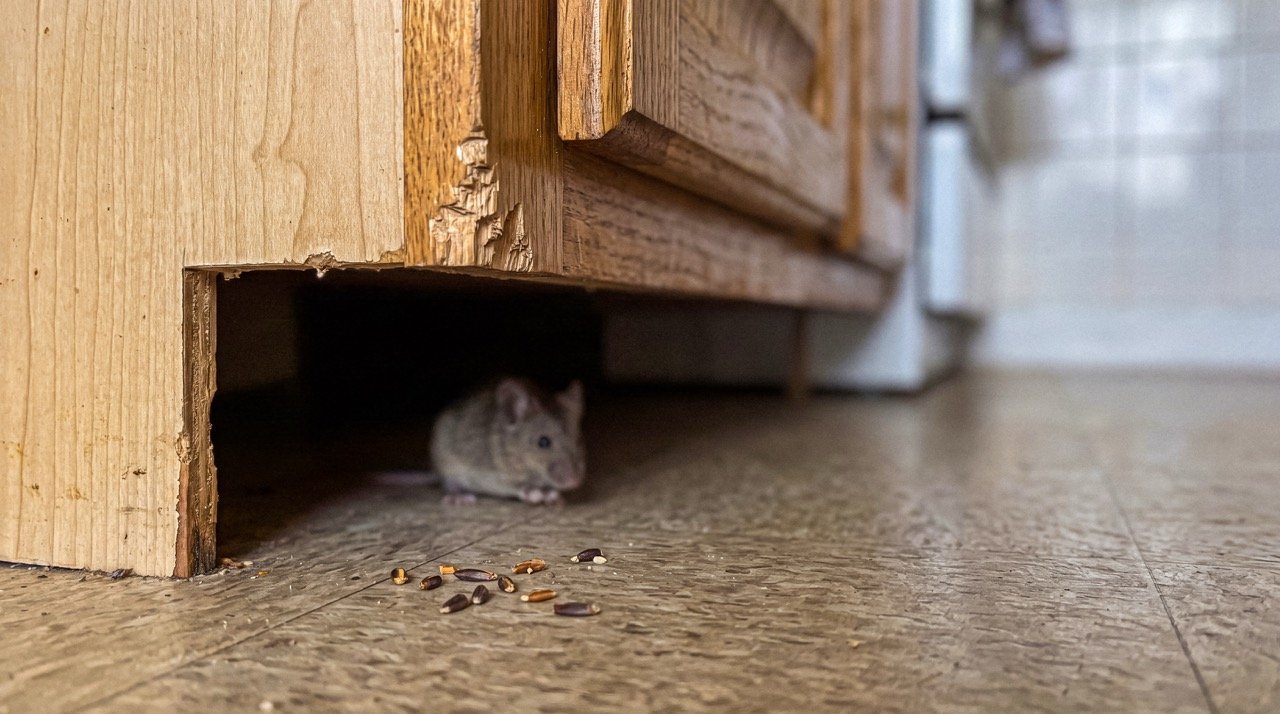
You hear scratching inside a wall late at night. The next morning, you discover a damaged food package or a few suspicious droppings in the garage. You probably have a rodent problem—but is it a rat or a mouse?
Understanding the differences between rats vs mice can help homeowners recognize what may be happening inside their property and determine the appropriate next step.
Although rats and mice share several characteristics, there are noticeable differences in their appearance, droppings, behavior, nesting habits, and the signs they leave behind. Both can enter homes searching for food, water, and shelter, making early identification important for preventing a small problem from becoming a larger infestation.
Here’s how to tell whether rats or mice may be responsible for the activity you’re noticing around your home.
Rats vs Mice: What’s the Main Difference?
The most obvious difference between rats and mice is their size.
Mice are generally smaller and more delicate in appearance, while rats have larger, heavier bodies.
A typical mouse has:
- A small body.
- Relatively large ears.
- A pointed snout.
- A thin tail.
- Small feet.
Rats generally have:
- A larger and heavier body.
- A broader head.
- A less pointed snout.
- A thicker tail.
- Larger feet.
However, homeowners don’t always see the rodent itself. In many cases, identification depends on the evidence left behind.
Rat Droppings vs. Mouse Droppings
Droppings are one of the most common signs of rodent activity and can provide useful clues about which animal may be present.
Mouse droppings are generally:
- Small.
- Dark.
- Narrow.
- Often pointed at the ends.
Rat droppings are usually:
- Larger.
- Thicker.
- More noticeable.
You may find rodent droppings around:
- Pantries.
- Kitchen cabinets.
- Garages.
- Attics.
- Storage areas.
- Behind appliances.
Droppings can pose sanitation concerns, so avoid touching suspected rodent waste directly with bare hands. Appropriate precautions should be taken when cleaning contaminated areas.
What Do Rodent Gnaw Marks Look Like?
Both rats and mice gnaw because their teeth continuously grow.
However, the size of the damage can provide another clue.
Mice generally leave smaller gnaw marks on materials such as:
- Food packaging.
- Cardboard.
- Soft materials.
- Small household items.
Rats are larger and stronger, meaning their gnawing can cause more substantial damage.
They may chew through:
- Plastic.
- Wood.
- Storage containers.
- Building materials.
Finding repeated gnaw marks around your property is a strong indication that rodent activity deserves further investigation.
Do Rats and Mice Behave Differently?
Yes. Behavior is another important consideration when comparing rats vs mice.
Mice tend to be curious and may explore new objects relatively quickly.
Rats are generally more cautious about changes in their environment. They may avoid unfamiliar objects or traps for a period of time.
Both rodents are commonly active at night, which is why homeowners often hear them rather than see them.
Common sounds include:
- Scratching.
- Scurrying.
- Gnawing.
- Rustling.
If these noises repeatedly occur after the home becomes quiet, rodents may be moving through walls, ceilings, or attic spaces.
Where Do Mice Usually Hide?
Mice can fit into very small spaces and often establish nests close to reliable food sources.
Potential hiding areas include:
- Cabinets.
- Wall voids.
- Storage rooms.
- Garages.
- Closets.
- Behind appliances.
They may build nests using shredded paper, cardboard, fabric, insulation, and other soft materials.
Because of their small size, mice can take advantage of openings that homeowners might not consider significant.
Where Do Rats Usually Hide?
Rats also prefer quiet and protected environments, but their larger size influences where they can comfortably travel and nest.
Depending on the species and property, rats may be found around:
- Attics.
- Roof areas.
- Garages.
- Crawl spaces.
- Landscaping.
- Outdoor structures.
- Storage spaces.
Some rats are excellent climbers and can use vegetation, fences, utility lines, or structural features to access elevated areas.
This makes exterior inspection an important part of rodent prevention.
How Do Rats and Mice Get Into Homes?
Both rats and mice are skilled at finding vulnerabilities around a structure.
Potential rodent entry points include:
- Gaps around exterior doors.
- Garage door openings.
- Damaged vents.
- Utility penetrations.
- Roof gaps.
- Openings around pipes.
- Structural cracks.
Mice can squeeze through particularly small gaps, while rats may enlarge vulnerable openings through gnawing.
Finding and sealing these access points is essential for long-term rodent control.
Removing rodents without addressing how they entered can allow the problem to return.
What Attracts Rats and Mice?
Rodents enter properties because they offer resources needed for survival.
Food
Potential food sources include:
- Pantry products.
- Pet food.
- Bird seed.
- Garbage.
- Outdoor food waste.
Food doesn’t need to be openly sitting on the floor. Rodents may chew through packaging to access stored products.
Water
Leaking plumbing, outdoor water sources, and other moisture can make a property more attractive.
Shelter
Attics, garages, cluttered storage areas, and wall voids provide protected locations where rodents can remain hidden.
Reducing access to these resources can help make your property less inviting.
What Are the Signs of a Rat Problem?
Possible signs of rats include:
- Larger rodent droppings.
- Noticeable gnaw damage.
- Scratching noises.
- Grease marks along frequently traveled paths.
- Damaged food containers.
- Nesting materials.
- Activity in attics or garages.
Because rats often follow established routes, repeated signs in the same areas may help identify where they’re traveling.
What Are the Signs of a Mouse Problem?
Mouse activity may include:
- Small droppings.
- Tiny gnaw marks.
- Damaged food packaging.
- Shredded nesting materials.
- Nighttime scratching.
- Activity behind kitchen appliances.
- Evidence inside cabinets or pantries.
The signs may initially seem minor, but mice can reproduce quickly when food and shelter are readily available.
Are Rats or Mice More Dangerous?
Rather than asking which rodent is “worse,” homeowners should treat either one as a problem that deserves attention.
Both rats and mice can:
- Contaminate food and surfaces.
- Damage stored belongings.
- Gnaw household materials.
- Establish nests inside structures.
- Create sanitation concerns.
The potential impact depends on factors such as the number of rodents, how long they’ve been present, and where they’re nesting.
Early intervention can help limit both property damage and contamination.
Can You Have Rats and Mice at the Same Time?
It is possible for a property to experience activity from different rodent species, although their behavior and territories may influence where they’re found.
Homeowners shouldn’t assume that every dropping or noise comes from the same type of rodent.
Professional identification can be particularly useful when signs appear in multiple parts of a property or don’t clearly point to one species.
Can You Identify a Rodent Without Seeing It?
Often, yes.
Pest control professionals can use several clues to determine what type of rodent may be present.
These include:
- Dropping size and shape.
- Gnaw marks.
- Tracks.
- Nesting materials.
- Travel patterns.
- Entry point size.
- Location of activity.
This is helpful because rodents tend to avoid people and may remain hidden for long periods.
You don’t need to physically see a rat or mouse before taking suspicious evidence seriously.
Why Traps Alone May Not Solve the Problem
Setting a trap may remove an individual rodent, but rodent management involves more than catching the animal you know about.
A complete approach should also consider:
- How rodents entered.
- Whether additional rodents are present.
- Where they’re nesting.
- What food or water sources are available.
- Which structural vulnerabilities need attention.
If these underlying conditions remain, rodent activity may return.
How Can You Help Prevent Rats and Mice?
Homeowners can take several steps to reduce the likelihood of rodent problems.
Seal Entry Points
Inspect the exterior of your home for gaps around doors, vents, utilities, plumbing, and roof areas.
Store Food Properly
Keep pantry products and pet food in secure containers.
Manage Garbage
Use trash containers with properly fitting lids and keep food waste inaccessible.
Reduce Clutter
Organized garages, attics, and storage rooms provide fewer hiding opportunities and make rodent activity easier to detect.
Maintain Landscaping
Trim vegetation near the structure and remove unnecessary debris that could provide outdoor shelter.
When Should You Call a Pest Control Professional?
Whether you’re dealing with rats or mice, recurring evidence is a reason to consider professional assistance.
Schedule an inspection if:
- Droppings continue appearing.
- You hear frequent scratching in walls or ceilings.
- Food packages are repeatedly damaged.
- You discover nesting materials.
- You see a live rodent.
- DIY trapping hasn’t solved the problem.
- You’re unsure how rodents are entering.
A professional inspection can help identify the species, locate potential entry points, and determine the extent of the activity.
Rats vs Mice: Identification Is the First Step
When comparing rats vs mice, size is the most obvious difference, but the evidence around your home can tell you much more.
Droppings, gnaw marks, nesting locations, noises, and travel patterns can all provide clues about which rodent you’re dealing with.
Regardless of the species, ignoring the warning signs gives rodents more time to settle into your property. Identifying the problem early and addressing both the animals and their entry points provides a much stronger foundation for long-term control.
Contact 911 Home Helps Today
Not sure whether rats or mice are responsible for the noises, droppings, or damage around your home? The team at 911 Home Helps can help identify the problem and determine where rodents may be entering your property.