Seeing dozens of winged insects suddenly appear around your home can be alarming—especially when you’re not sure whether you’re looking at harmless flying insects, ants, or termites.
In Florida, termite swarms are an important warning sign homeowners should know how to recognize.
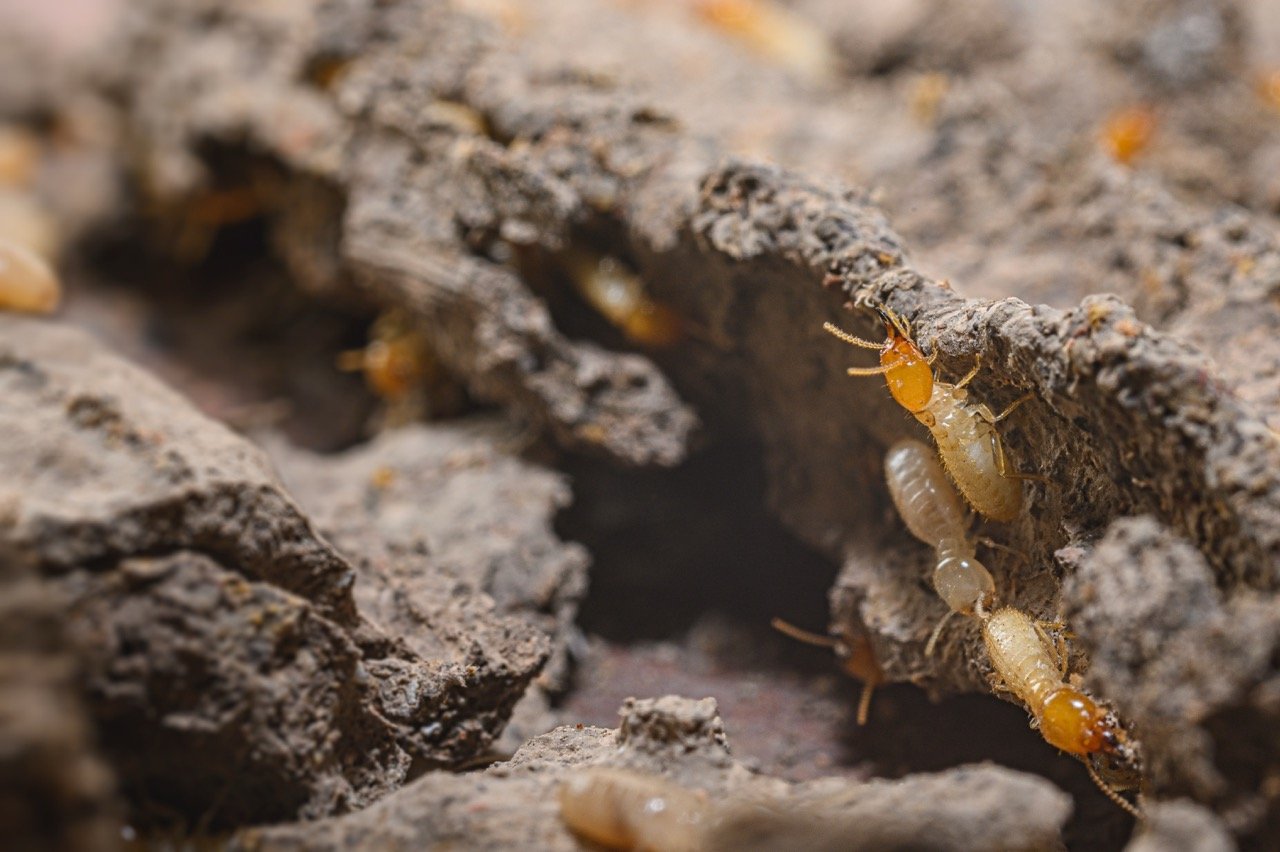
Swarming is part of the natural termite reproductive cycle. Winged termites, known as swarmers or alates, leave established colonies to reproduce and potentially form new colonies.
For homeowners, however, their appearance raises an important question: are these termites simply coming from somewhere outdoors, or could there be termite activity associated with the home?
Understanding termite swarm season in Florida, what swarmers look like, and what to do when you find them can help you respond appropriately.
What Is a Termite Swarm?
A termite colony contains different members with different roles.
At certain stages, mature colonies can produce reproductive termites with wings. These termites leave the colony in groups, creating what we call a swarm.
Their goal is to reproduce and establish new colonies.
Homeowners may notice:
- Winged termites flying around.
- Large numbers of insects appearing suddenly.
- Insects gathering near windows or lights.
- Discarded wings on window sills or floors.
The swarm itself may not last long, which is why homeowners sometimes find only the wings afterward.
Those wings can still provide an important clue.
When Is Termite Swarm Season in Florida?
There isn’t one single date that defines termite swarm season in Florida.
Different termite species can swarm at different times and under different environmental conditions.
Temperature, humidity, rainfall, and time of day can all influence swarming activity.
Some termite activity may be associated with warmer and wetter periods, but Florida’s climate means homeowners shouldn’t assume termite concerns are limited to one short season.
The most useful approach is to recognize the signs whenever they appear.
Why Does Florida Have Significant Termite Activity?
Florida’s warm and humid climate can provide favorable conditions for multiple termite species.
Residential properties also contain materials termites may use as food sources, including cellulose found in wood and other building materials.
Conditions around a property can further influence termite risk.
Examples include:
- Moisture near the structure.
- Wood debris.
- Tree stumps.
- Wooden materials stored near the house.
- Landscaping conditions.
- Drainage issues.
None of these conditions automatically means a home has termites, but understanding the environment can help homeowners think more proactively about prevention.
What Do Termite Swarmers Look Like?
Termite swarmers are winged reproductive termites.
They may be relatively small and can easily be mistaken for flying ants, particularly when homeowners only get a quick look.
Some characteristics commonly associated with termite swarmers include:
- Two pairs of wings.
- Wings that appear similar in size.
- A relatively straight body shape.
- Straight-looking antennae.
Flying ants generally have more noticeable body segmentation and differently proportioned wings.
However, identification isn’t always easy without experience.
If you’re unsure, save a specimen or take clear photos rather than relying entirely on an online comparison.
Flying Ants vs. Termites
Confusing flying ants with termites is extremely common.
Both can appear suddenly and both may have wings.
The difference matters because the appropriate response is very different.
An ant swarm doesn’t automatically indicate a termite problem, while termite swarmers can be an important reason to investigate the property.
Look at:
Body shape: Ants generally have a more defined narrow waist, while termites have a straighter body profile.
Antennae: Ant antennae are typically bent or elbowed, while termite antennae appear straighter.
Wings: Termite wings tend to be more similar in length, while flying ants generally have differently sized front and rear wings.
When identification is uncertain, professional evaluation is the safer approach.
Why Are Termites Gathering Near My Windows?
Homeowners frequently notice swarmers around windows.
Winged termites can be attracted toward light, which may cause them to gather near:
- Windows.
- Sliding glass doors.
- Other bright areas.
Finding a few winged insects outside doesn’t necessarily tell you where the colony is located.
Finding numerous swarmers or discarded wings indoors, however, deserves closer attention.
The location where you find them can provide useful information during an inspection.
What Do Discarded Termite Wings Mean?
After termite swarmers land, they shed their wings.
As a result, homeowners may discover small piles or scattered wings without seeing any live termites.
Common places include:
- Window sills.
- Floors.
- Near doors.
- Around light sources.
- Near baseboards.
Don’t automatically vacuum everything before documenting what you’ve found.
Take photographs and, when practical, preserve a sample for identification.
Discarded wings may help a pest professional determine what type of insect was present.
Does Seeing a Termite Swarm Mean My House Is Infested?
Not automatically.
A swarm outdoors can originate from a colony somewhere in the surrounding environment.
However, swarmers emerging from inside the home or repeatedly appearing indoors can be more concerning.
The challenge is that homeowners often can’t determine the colony’s location simply by observing the swarm.
A professional termite inspection can help evaluate the property for additional evidence.
What Other Termite Signs Should You Look For?
A swarm is only one potential warning sign.
Depending on the termite species, other evidence may include:
- Termite droppings.
- Mud tubes.
- Small openings in wood.
- Damaged wooden materials.
- Discarded wings.
- Repeated swarming activity.
You may also notice changes in wood that deserve further investigation.
Remember that not every termite species leaves the same visible evidence.
The absence of frass, for example, doesn’t mean subterranean termite activity can be ruled out.
What Are Termite Droppings?
Certain termites, particularly drywood termites, can produce small pellet-like droppings called frass.
These pellets may collect beneath small openings in infested wood.
Homeowners sometimes mistake termite droppings for:
- Sawdust.
- Sand.
- Dirt.
- Ordinary debris.
If you clean up a suspicious pile and it returns in the same location, consider having it identified.
Recurring debris can be a useful clue when combined with other signs.
What Are Termite Mud Tubes?
Subterranean termites may create mud tubes that help them move between the soil and food sources while maintaining protected conditions.
These structures can sometimes be found around:
- Foundations.
- Exterior walls.
- Crawl spaces.
- Structural supports.
If you discover suspicious mud-like tubes, don’t assume they’re simply dried dirt.
They may warrant professional evaluation.
What Should You Do If You See a Termite Swarm?
The first step is simple: document it.
Take photos or videos if possible.
Then:
- Note where the insects appeared.
- Record whether they were indoors or outdoors.
- Look for discarded wings.
- Preserve a sample when practical.
- Avoid disturbing suspicious wood unnecessarily.
- Schedule an inspection if termite activity is suspected.
The more information you can provide, the easier it may be to identify what happened.
Should You Spray Termite Swarmers?
Killing the visible swarmers doesn’t necessarily address the source.
Remember, the swarmers represent reproductive members that came from an established colony.
A household insect spray may eliminate some insects you see, but it doesn’t tell you:
- Where the colony is located.
- Whether the home is affected.
- How extensive the activity may be.
- Which termite species is involved.
Instead of focusing exclusively on the visible insects, investigate why they appeared.
Can You Prevent Termite Swarms?
You can’t control every termite colony in the surrounding environment.
Termites naturally exist outdoors.
However, homeowners can reduce certain conditions around their property that may contribute to termite concerns.
Consider:
- Correcting plumbing leaks.
- Improving drainage problems.
- Reducing unnecessary moisture near the structure.
- Removing wooden debris.
- Monitoring wood stored near the home.
- Inspecting suspicious changes in wooden materials.
- Paying attention to discarded wings and swarmers.
Prevention is about reducing favorable conditions and detecting problems earlier, not guaranteeing that you’ll never encounter a termite.
Can Termites Swarm After Rain?
Environmental conditions, including moisture and rainfall, can influence termite behavior.
Homeowners may notice increased insect activity following changes in weather.
However, you shouldn’t use rainfall alone to determine whether winged insects are termites.
If a swarm occurs after rain, identification is still important.
Take a closer look at the insects or have a professional evaluate them.
What If the Swarm Disappears?
Don’t assume the problem is over simply because the insects are gone.
A swarm may be brief.
The visible insects can disappear while the established colony that produced them remains active elsewhere.
This is one reason discarded wings are important.
They may be the only obvious evidence left after the swarm ends.
If you believe termites were involved, consider an inspection even if you no longer see live swarmers.
Can Termites Be Present Without Swarming Inside?
Yes.
Not seeing a swarm indoors does not prove a property is termite-free.
Termite activity can remain hidden, and homeowners may notice other evidence—or no obvious evidence at all.
Swarming is one possible warning sign, not the only one.
That’s why termite awareness should extend beyond swarm season.
Is a Termite Inspection Worth It After a Swarm?
If swarmers appear indoors, repeatedly appear around the structure, or are accompanied by other suspicious evidence, a professional termite inspection can provide valuable information.
An inspection may help determine:
- Whether the insects were termites.
- Which type may be present.
- Whether additional evidence exists.
- Which areas require closer attention.
- What next steps may be appropriate.
Trying to diagnose termite activity based solely on a few insects can be difficult.
Professional identification removes much of that uncertainty.
Don’t Ignore the Signs After the Swarm Ends
Understanding termite swarm season in Florida isn’t about memorizing a particular month.
It’s about knowing what swarming means.
Winged termites are part of the reproductive cycle of established colonies. When they appear around a home—particularly indoors—they provide a reason to pay attention.
Document the insects, look for discarded wings, check for other termite evidence, and avoid assuming the problem has disappeared simply because the swarm ended.
Termites can remain concealed long after the most visible activity is gone.
Recognizing the warning signs early gives homeowners an opportunity to investigate before waiting for more obvious evidence.
Contact 911 Home Helps Today
Have you found winged insects or discarded wings around your Florida home? 911 Home Helps can inspect your property, help identify signs of termite activity, and recommend appropriate next steps based on what is found.