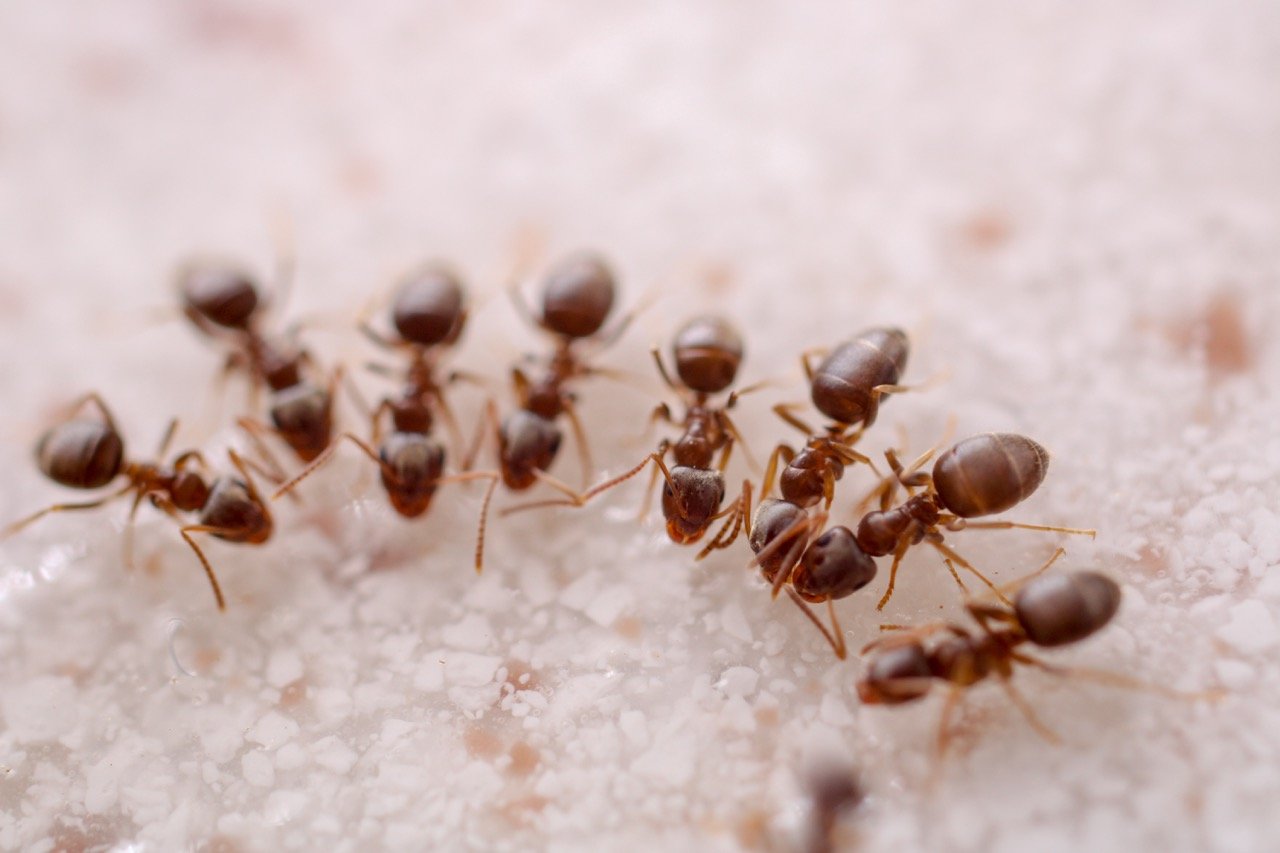
One day, your kitchen counter is completely clear.
The next morning, there’s a trail of ants moving toward the sink.
It can seem as though dozens of ants appeared overnight with no explanation. But in most cases, the activity isn’t as sudden as it looks.
Ant colonies can exist outdoors, inside structural spaces, or elsewhere around a property without being immediately noticeable. When worker ants discover food, water, or favorable conditions, activity may quickly become much more visible.
So, why do ants suddenly appear in your house?
Changes in weather, access to food, moisture, new entry points, and colony behavior can all contribute.
For Florida homeowners, where warm temperatures and humidity can support pest activity throughout much of the year, understanding why ants appear is the first step toward preventing them from becoming a recurring problem.
Why Do Ants Seem to Appear Overnight?
Ants often send workers out to search for resources.
A few individual ants may explore an area without attracting your attention.
Once they find something useful, however, they can establish trails that other ants follow.
This can transform a few unnoticed ants into a visible line relatively quickly.
What looks like an overnight infestation may therefore be the result of ants discovering:
- Food.
- Water.
- Moisture.
- A reliable entry point.
- A protected location.
The visible ants are only part of the situation.
Understanding where they’re coming from is usually more important than simply removing the workers you can see.
Food Is One of the Most Common Reasons Ants Appear
A kitchen provides plenty of potential food sources.
Ants may investigate:
- Crumbs.
- Sugar.
- Syrup.
- Fruit.
- Grease.
- Food residue.
- Pet food.
- Spilled drinks.
Even small amounts can be enough to attract foraging ants.
A countertop may look clean while food residue remains beneath appliances, inside cabinets, or along edges that aren’t cleaned as frequently.
If ants suddenly appear in the kitchen, begin by checking where the trail leads.
Why Are Ants Going to My Sink?
Ants don’t enter kitchens only for food.
Water can also attract them.
A sink area may provide:
- Water droplets.
- Moisture.
- Damp sponges.
- Plumbing leaks.
- Condensation.
If ants repeatedly gather near a sink even after food has been removed, inspect for moisture.
Check underneath the cabinet as well.
A small plumbing leak may create favorable conditions without being immediately obvious.
Pet Food Can Cause Sudden Ant Activity
Pet bowls are another frequently overlooked food source.
Dry pet food may remain available for hours, while pieces can fall around the bowl.
Ants that discover it may establish a trail.
Clean around feeding areas regularly and store larger bags of pet food securely.
If ants repeatedly return to the same location, don’t simply move the bowl without investigating where they’re entering.
Why Are Ants Appearing in My Bathroom?
Finding ants in a bathroom can be confusing because there’s usually little traditional food available.
Moisture is often a more important factor.
Ants may investigate areas around:
- Sinks.
- Showers.
- Bathtubs.
- Plumbing.
- Damp cabinets.
- Windows.
If activity is concentrated in one bathroom, inspect for leaks, condensation, or gaps around plumbing penetrations.
The ants may also be traveling through structural spaces rather than entering directly from outdoors.
Can Rain Cause Ants to Come Inside?
Weather can influence ant activity.
Heavy rain may disturb outdoor nesting areas or change the availability of food and shelter.
As environmental conditions shift, ants may become more noticeable around residential structures.
Florida’s periods of heavy rainfall can therefore coincide with changes in pest activity.
However, seeing ants after rain doesn’t necessarily mean rain is the only cause.
The ants still need an access route into the home.
What About Hot and Dry Weather?
Dry conditions can also influence ant behavior.
When outdoor water becomes less available, ants may investigate moisture sources around homes.
Kitchens, bathrooms, irrigation areas, and plumbing can become attractive.
This is why ant problems shouldn’t be viewed as something that occurs only during rainy weather.
Different environmental conditions can change where colonies search for resources.
How Are Ants Getting Into the House?
Ants can use extremely small openings.
Potential entry points include:
- Door gaps.
- Window frames.
- Cracks.
- Utility penetrations.
- Plumbing openings.
- Gaps around exterior materials.
- Garage areas.
Sometimes the route is obvious.
You may see a trail moving directly through a window gap.
Other times, ants seem to emerge from behind cabinets or baseboards because their travel route is concealed.
Follow the trail when possible rather than spraying it immediately.
It may reveal useful information about where they’re entering.
Why Are Ants Coming From the Wall?
Seeing ants emerge from a wall doesn’t necessarily tell you exactly where the colony is located.
They may be traveling through wall voids and using a small opening as an exit point.
Possible access locations include gaps around:
- Electrical components.
- Plumbing.
- Cabinets.
- Baseboards.
- Windows.
Avoid unnecessarily opening walls based on a few ants.
Instead, document the location and monitor whether activity repeatedly occurs there.
Does Seeing Ants Mean There Is a Nest Inside?
Not always.
Ants may be entering from an outdoor colony and traveling inside for food or water.
In other situations, nesting activity may be associated with structural areas.
The species matters.
Different ants have different nesting habits and respond differently to environmental conditions.
This is one reason identification can be useful when an ant problem keeps returning.
Why Do Ants Keep Following the Same Path?
Ant trails are an important part of how many ants locate resources.
Once a useful food or water source is discovered, other workers may follow the established route.
That’s why you may repeatedly see ants moving along:
- Counter edges.
- Baseboards.
- Window frames.
- Walls.
- Cabinet edges.
Cleaning the surface can remove food residue and trail material, but if the colony still has access to the area and the resource remains available, activity may return.
Why Do Ants Come Back After You Clean?
Cleaning is an important step, but it doesn’t necessarily address the colony or entry route.
Suppose ants enter through a gap around a window and find a small amount of food.
You clean the counter and remove every visible ant.
That helps eliminate the immediate attraction.
But the structural opening still exists.
If ants continue searching the area, they may eventually find another resource and reappear.
Long-term prevention considers both sanitation and access.
Why Did Ants Appear After I Sprayed Them?
This situation can be frustrating.
You spray the ants you see, they disappear, and then more ants appear later.
The problem is that visible workers may represent only a portion of the colony.
Removing those workers doesn’t necessarily address the source.
Treatment strategies can also vary depending on the ant species.
Repeatedly spraying random areas without identifying the ant or understanding its behavior may fail to provide long-term control.
Can DIY Ant Sprays Make the Problem Harder to Solve?
Depending on the ant species and treatment approach, inappropriate control methods may not address the colony effectively.
Some ant species can respond differently to disturbance.
This is why recurring ant activity is better approached by first understanding:
- Which ant is present.
- Where activity is concentrated.
- What resources are attracting them.
- Where they may be entering.
The goal isn’t simply to kill the ants visible at that moment.
It’s to address the conditions supporting the problem.
Are Tiny Ants Common in Florida Homes?
Florida homeowners may encounter several types of small ants.
Because many species can look similar to an untrained eye, color and size alone aren’t always enough for reliable identification.
Tiny ants may appear around:
- Kitchens.
- Bathrooms.
- Windows.
- Plumbing.
- Food storage areas.
If the ants repeatedly return despite cleaning and prevention efforts, professional identification can help determine a more appropriate control strategy.
Can Landscaping Bring Ants Closer to the House?
Landscaping can provide habitat for ants and other pests.
Dense vegetation, mulch, moisture, and plant material around the structure may support insect activity.
This doesn’t mean homeowners need to remove their gardens.
Instead:
- Maintain vegetation.
- Avoid excessive moisture.
- Monitor areas near exterior walls.
- Keep the perimeter visible enough to inspect.
If ant trails repeatedly travel from landscaping toward the house, that route may help explain the indoor activity.
Can Tree Branches Help Ants Reach Your Home?
Branches and vegetation touching the structure can provide additional pathways.
Ants may travel across plants, walls, utility lines, and other surfaces while searching for resources.
Keeping vegetation appropriately maintained can reduce some direct connections between landscaping and the structure.
Again, prevention is rarely about one single change.
Several small improvements often work together.
Why Do Ants Suddenly Appear Around Windows?
Windows can provide both access and environmental attractions.
Small gaps around frames may allow ants inside.
Windows can also have:
- Condensation.
- Nearby vegetation.
- Small insects.
- Protected edges.
If ants consistently appear around the same window, inspect both the interior and exterior.
Look for trails before disturbing them.
Are Ants a Sign That Your House Is Dirty?
No.
Ants can enter clean homes.
Good sanitation reduces food sources, but it doesn’t eliminate every reason ants may investigate a property.
A clean house can still have:
- Moisture.
- Plumbing leaks.
- Structural gaps.
- Outdoor colonies.
- Landscaping near walls.
An ant problem should therefore be treated as a pest management issue rather than automatically being blamed on housekeeping.
How Can You Help Prevent Ants From Appearing?
Start by reducing the resources and access points ants may use.
Clean Food Residue
Pay attention to countertops, floors, cabinets, and areas beneath appliances.
Store Food Properly
Keep pantry products and pet food securely stored.
Address Moisture
Repair leaks and investigate persistently damp areas.
Check Doors and Windows
Look for obvious gaps where ant trails enter.
Maintain Landscaping
Keep vegetation manageable around exterior walls.
Monitor Ant Trails
Instead of immediately destroying every trail, observe where ants are coming from and where they’re going.
Keep Garbage Areas Clean
Food residue around indoor and outdoor trash containers can provide another attraction.
These steps can help reduce conditions that support recurring ant activity.
Should You Seal Ant Entry Points?
Sealing structural gaps can be an important part of pest prevention.
However, if you have significant ongoing ant activity, it’s useful to understand the source before focusing exclusively on sealing one visible opening.
Ants may have multiple travel routes.
Closing one gap doesn’t necessarily address a colony or other structural access points.
Exclusion works best as part of a broader prevention strategy.
When Should You Call Pest Control for Ants?
Professional ant control may be appropriate when:
- Ants repeatedly return.
- Multiple rooms are affected.
- You can’t determine where they’re coming from.
- Activity continues despite sanitation improvements.
- Ants appear to be emerging from structural areas.
- DIY treatments haven’t solved the problem.
- You’re unsure which ant species is present.
A professional inspection can help identify the ants and evaluate conditions that may be contributing to the activity.
The Ants Didn’t Really Appear From Nowhere
So, why do ants suddenly appear?
Usually, something changed—or the ants finally discovered something they were searching for.
Food became accessible.
Water was available.
Weather conditions shifted.
A trail developed.
Or ants found a convenient way into the home.
Instead of focusing only on the visible ants, follow the clues.
Where are they coming from?
Where are they going?
What are they finding when they get there?
Answering those questions can help turn a frustrating recurring ant problem into something much easier to understand and manage.
Contact 911 Home Helps Today
Are ants suddenly appearing in your Florida home or repeatedly returning after DIY treatments? 911 Home Helps can inspect your property, identify conditions contributing to ant activity, and recommend an appropriate pest control strategy.