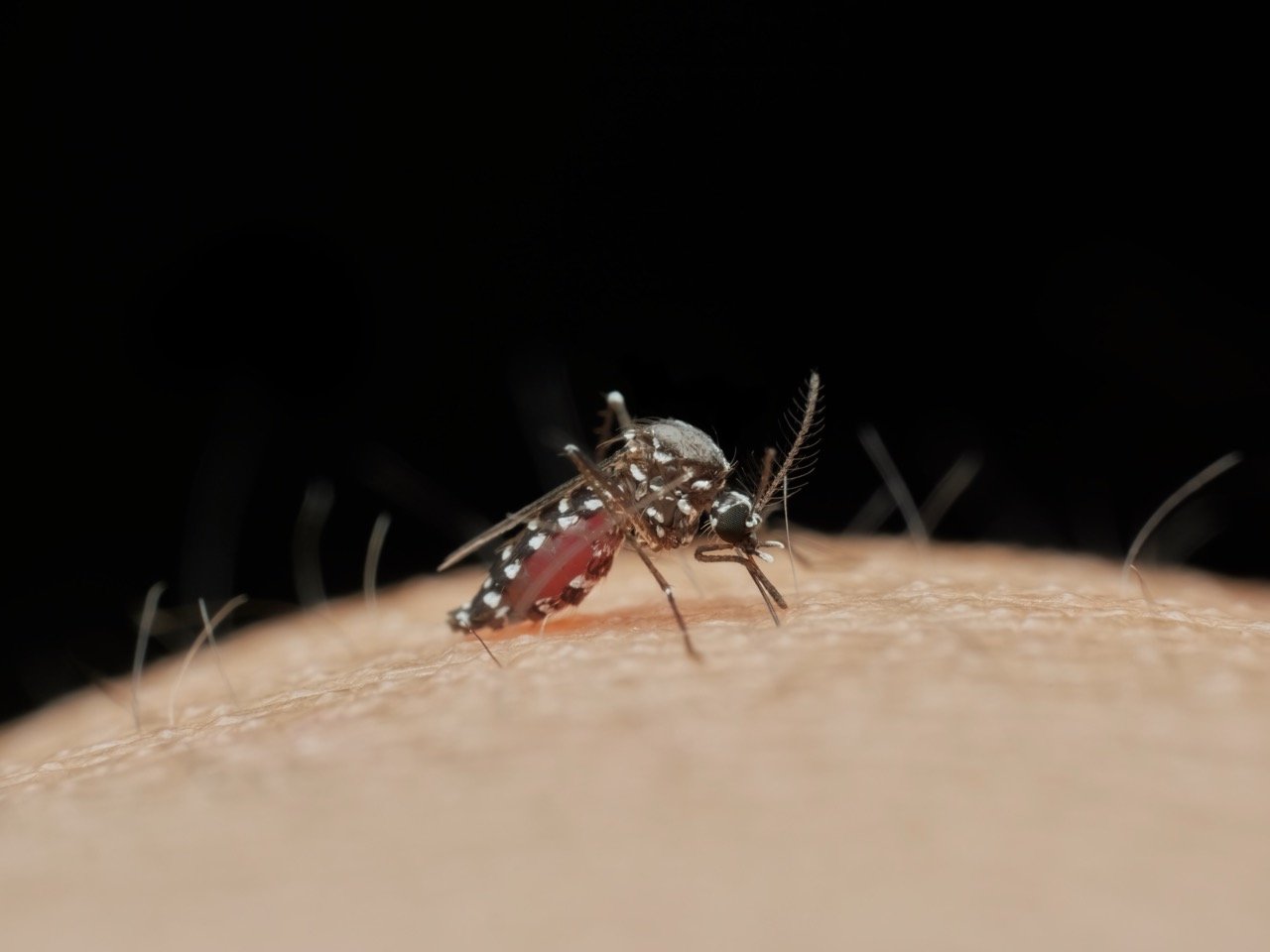
Have you ever spent an evening outdoors with friends or family and noticed that one person ends up covered in mosquito bites while everyone else seems relatively unaffected?
It’s a common experience, especially in Florida, where warm weather and seasonal rainfall can create favorable conditions for mosquitoes.
But why do mosquitoes bite some people more than others?
The answer involves several factors, including the carbon dioxide we exhale, body heat, skin chemistry, and even the clothing we wear.
Mosquitoes don’t choose people randomly. They use a combination of environmental signals to locate potential hosts, and some individuals may produce signals that are more attractive to certain mosquito species.
Understanding these factors can help explain why mosquito bites seem unevenly distributed and what you can do to reduce your exposure.
Why Do Mosquitoes Bite Some People More Than Others?
Female mosquitoes need blood meals to support egg production. Male mosquitoes do not bite people.
To locate a host, female mosquitoes rely on several sensory cues.
These may include carbon dioxide, body odors, heat, moisture, and visual signals.
Different mosquito species may respond to these cues in different ways.
This means a person who attracts one species may not necessarily attract every mosquito species to the same degree.
Although researchers continue studying mosquito attraction, several factors are known to influence how mosquitoes locate and select hosts.
1. Carbon Dioxide Makes You Easier to Find
One of the most important signals mosquitoes use is carbon dioxide.
Humans release carbon dioxide every time they breathe.
Mosquitoes can detect changes in carbon dioxide concentrations and use this information to help locate potential hosts.
People who release greater amounts of carbon dioxide may be more noticeable to mosquitoes under certain conditions.
However, carbon dioxide is only part of the process.
Once mosquitoes approach a potential host, other cues help guide them toward exposed skin.
2. Body Heat Can Attract Mosquitoes
Mosquitoes can detect temperature differences in their surroundings.
Body heat helps certain mosquitoes locate suitable areas for feeding.
This is one reason mosquitoes may be attracted to warm, exposed skin.
Heat can become particularly relevant when mosquitoes are already close to a person.
However, body temperature alone does not determine who gets bitten.
Mosquito attraction results from multiple signals working together.
3. Your Skin Chemistry Matters
Human skin produces a complex mixture of chemical compounds.
Some of these compounds contribute to the odors mosquitoes use to recognize potential hosts.
Research suggests that differences in skin chemistry can help explain why certain people are consistently more attractive to mosquitoes.
For example, studies involving Aedes aegypti mosquitoes have identified associations between mosquito attraction and certain compounds found on human skin.
However, these findings do not mean that a single chemical determines every mosquito bite.
Mosquito species, environmental conditions, and individual characteristics can all influence the outcome.
4. Sweat and Skin Odors Can Influence Attraction
Sweating is a normal way for the body to regulate temperature.
Sweat itself contains several substances, and interactions between skin secretions and microorganisms contribute to body odor.
Certain mosquito species respond to chemical signals associated with human skin and sweat.
This helps explain why physical activity may influence mosquito encounters.
However, the relationship is more complicated than simply saying that mosquitoes prefer sweaty people.
The specific compounds present and the mosquito species involved both matter.
5. Exercise May Increase Mosquito Attraction
After exercising, your body may be warmer, your breathing rate may increase, and you may produce more sweat.
These changes can affect several of the signals mosquitoes use to locate hosts.
For someone jogging, gardening, or playing sports outdoors in Florida, these conditions may contribute to mosquito encounters.
However, outdoor activity also increases exposure simply because you are spending more time in places where mosquitoes may be present.
The best approach is to use appropriate mosquito protection before beginning outdoor activities.
6. Pregnancy May Affect Mosquito Attraction
Some research has found that pregnant individuals may attract more mosquitoes under certain conditions.
Possible contributing factors include changes in body temperature and carbon dioxide production.
However, the findings should not be interpreted as a universal rule for every mosquito species or pregnancy.
Pregnant individuals should follow public health recommendations for preventing mosquito bites, particularly when mosquito-borne diseases are a concern.
7. Clothing Color Can Make a Difference
Mosquitoes use visual information along with chemical signals to locate hosts.
Research involving certain mosquito species suggests that some colors may be more visually attractive than others under specific conditions.
Darker clothing can also affect visibility and heat absorption.
However, clothing color is not a substitute for proven mosquito prevention measures.
Wearing long sleeves and long pants that cover exposed skin is generally more important than relying on a particular color alone.
8. Genetics May Play a Role
Your genetic makeup can influence several characteristics associated with mosquito attraction.
These may include aspects of body odor and skin chemistry.
Researchers have investigated how inherited differences contribute to variation in mosquito attraction.
However, genetics does not fully determine whether a person will be bitten.
Environmental conditions, behavior, mosquito species, and prevention measures also matter.
Does Blood Type Affect Mosquito Bites?
You may have heard that mosquitoes prefer people with a particular blood type.
Some studies have investigated associations between blood type and mosquito attraction.
However, the evidence is not strong enough to conclude that one blood type consistently attracts all mosquitoes more than others.
Mosquito attraction involves many interacting factors.
For practical prevention, blood type is far less useful than reducing exposure and using effective repellents.
Why Do Mosquitoes Bite Me but Not My Partner?
Two people sitting in the same backyard may have different experiences with mosquitoes.
Differences in skin chemistry, body temperature, carbon dioxide production, clothing, and movement may contribute.
Another possibility is that people react differently to bites.
Some individuals develop noticeable swelling and itching, while others have much milder skin reactions.
This means the person with more visible bite marks has not necessarily received more bites in every situation.
Why Do Some Mosquito Bites Itch More Than Others?
When a mosquito bites, it introduces saliva into the skin.
The immune system may react to components of that saliva, causing itching, redness, and swelling.
The intensity of the reaction varies from person to person.
Some people experience mild irritation, while others develop larger localized reactions.
Scratching can further irritate the skin and may increase the risk of secondary infection.
If a reaction is severe, unusual, or accompanied by concerning symptoms, seek medical advice.
Are Mosquitoes More Active at Certain Times in Florida?
Mosquito activity depends on the species.
Some mosquitoes are most active around dawn and dusk, while others may bite during the daytime.
For example, certain Aedes mosquitoes are important daytime biters.
This means avoiding outdoor activity only at sunset will not prevent every mosquito bite.
Florida homeowners should consider mosquito protection whenever they are outdoors in areas with mosquito activity.
Can Mosquitoes Bite Through Clothing?
Mosquitoes may be able to bite through some thin or tightly fitted fabrics.
Loose-fitting clothing that covers exposed skin can help reduce access.
For additional protection, certain clothing items can be treated with permethrin according to product instructions.
Permethrin-treated clothing should be used as directed, and permethrin products intended for clothing should not be applied directly to skin.
How to Reduce Mosquito Bites in Your Backyard
Even if your body chemistry makes you more attractive to mosquitoes, you can still take practical steps to reduce exposure.
Use an EPA-Registered Insect Repellent
Choose a repellent registered with the U.S. Environmental Protection Agency and follow the label instructions.
Common active ingredients include DEET, picaridin, IR3535, and oil of lemon eucalyptus-derived PMD products.
Always check age restrictions and application directions.
Wear Protective Clothing
Long sleeves, long pants, and appropriate footwear can reduce exposed skin.
Choose clothing suitable for Florida’s warm weather while maintaining coverage.
Remove Standing Water
Mosquitoes require water for their immature stages.
Regularly inspect flowerpots, buckets, toys, gutters, and other containers that may collect rainwater.
Empty and clean water-holding containers as appropriate.
Maintain Window and Door Screens
Repair damaged screens and reduce opportunities for mosquitoes to enter indoor spaces.
Use Fans in Outdoor Areas
Air movement may make it harder for some mosquitoes to fly and locate hosts.
Fans can be a useful additional measure in patios and other outdoor seating areas, although they do not replace repellents.
Does Eating Garlic Prevent Mosquito Bites?
Garlic is sometimes promoted as a natural mosquito repellent.
However, there is insufficient reliable evidence that eating garlic provides meaningful protection against mosquito bites.
The same caution applies to many popular dietary remedies.
Instead of relying on food-based claims, use prevention methods supported by public health guidance.
Do Vitamin B Supplements Repel Mosquitoes?
Vitamin B supplements are another commonly suggested mosquito prevention method.
However, research has not established them as a reliable way to prevent bites.
Taking supplements specifically to repel mosquitoes is not a substitute for proven protection.
Use an appropriate repellent and reduce mosquito breeding opportunities around your property.
Can Professional Mosquito Control Help?
Professional mosquito management may help reduce mosquito activity around a property.
A pest control professional can evaluate areas where mosquitoes may breed or rest and recommend appropriate management measures.
Depending on the situation, this may include habitat recommendations, monitoring, or targeted treatments.
However, no outdoor mosquito control service can guarantee that mosquitoes will never enter a yard.
Mosquitoes can move between properties, and environmental conditions continually change.
For this reason, professional management works best alongside personal bite prevention and regular property maintenance.
Why Mosquito Prevention Matters in Florida
Mosquito bites are more than an inconvenience.
Certain mosquito species can transmit diseases, although not every mosquito carries a pathogen.
Public health agencies monitor mosquito-borne disease risks and provide recommendations based on local conditions.
Florida residents should follow current guidance from public health authorities, particularly when travel-related or locally acquired mosquito-borne illnesses are reported.
Using repellents, reducing standing water, and maintaining screens are practical steps that can help limit exposure.
Can You Change How Attractive You Are to Mosquitoes?
Some characteristics associated with mosquito attraction, such as aspects of skin chemistry, are not easily changed.
However, you can change your level of exposure.
Wearing protective clothing, using effective repellents, managing standing water, and reducing mosquito activity around your property can all help.
Instead of trying to change your body’s natural chemistry, focus on prevention strategies that have demonstrated value.
Understanding Why Mosquitoes Bite Some People More
So, why do mosquitoes bite some people more than others?
The answer involves carbon dioxide, body heat, skin chemistry, odors, visual cues, and individual differences in reactions to bites.
No single factor explains every mosquito encounter.
For Florida homeowners, the most important takeaway is that mosquito attraction does not have to determine how much time you can comfortably spend outdoors.
With consistent bite prevention and attention to mosquito breeding conditions, you can reduce exposure and make your outdoor spaces more enjoyable.
Contact 911 Home Helps Today
Are mosquitoes making it difficult to enjoy your Florida backyard? 911 Home Helps can evaluate your property for conditions that may support mosquito activity and recommend an appropriate mosquito management strategy.
Contact us today to schedule a professional mosquito inspection and learn more about reducing mosquito activity around your home.
Sources and References
The mosquito attraction and prevention information in this article is informed by guidance and research from the Centers for Disease Control and Prevention (CDC) on preventing mosquito bites, the U.S. Environmental Protection Agency (EPA) on insect repellents, and published scientific research on how mosquitoes respond to human odors, heat, and other sensory cues. These resources provide additional information about mosquito behavior and evidence-based approaches to reducing bites.