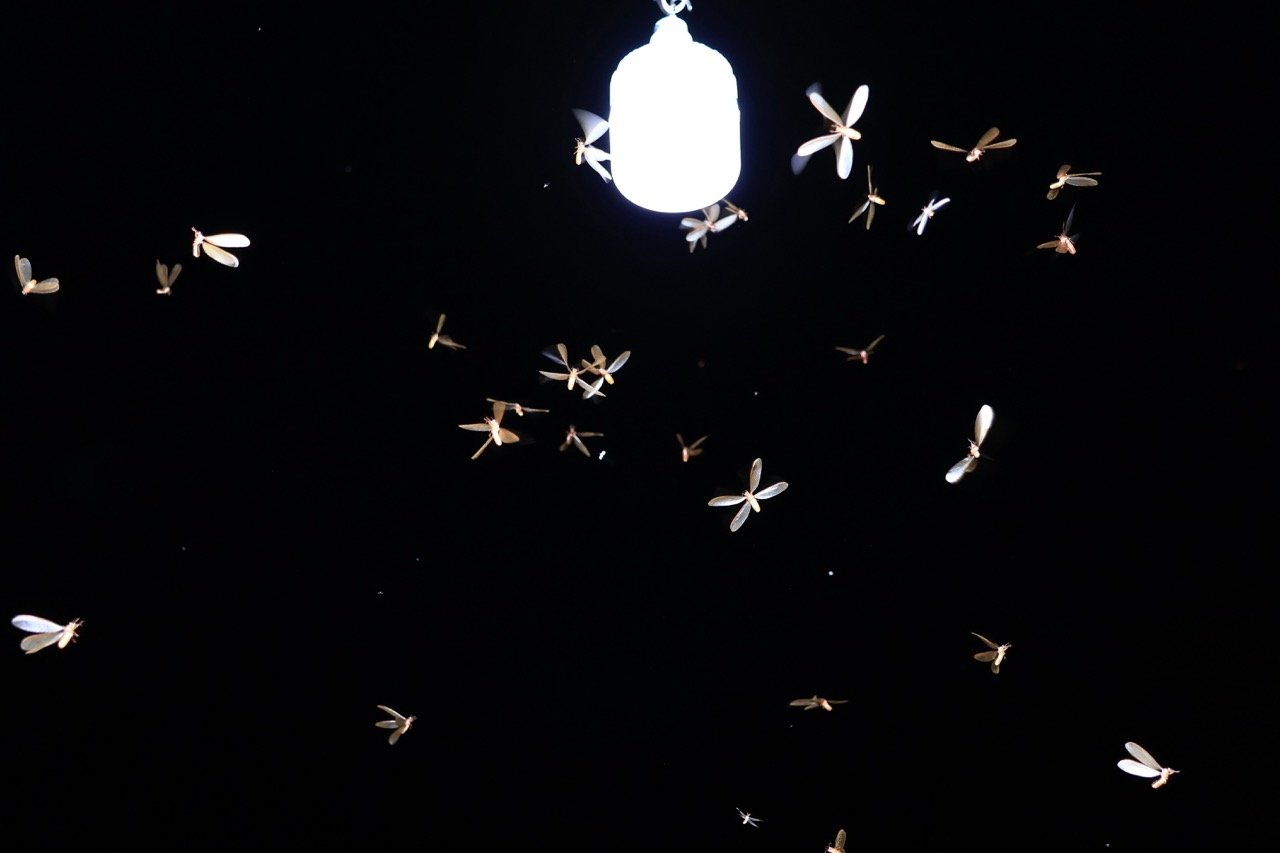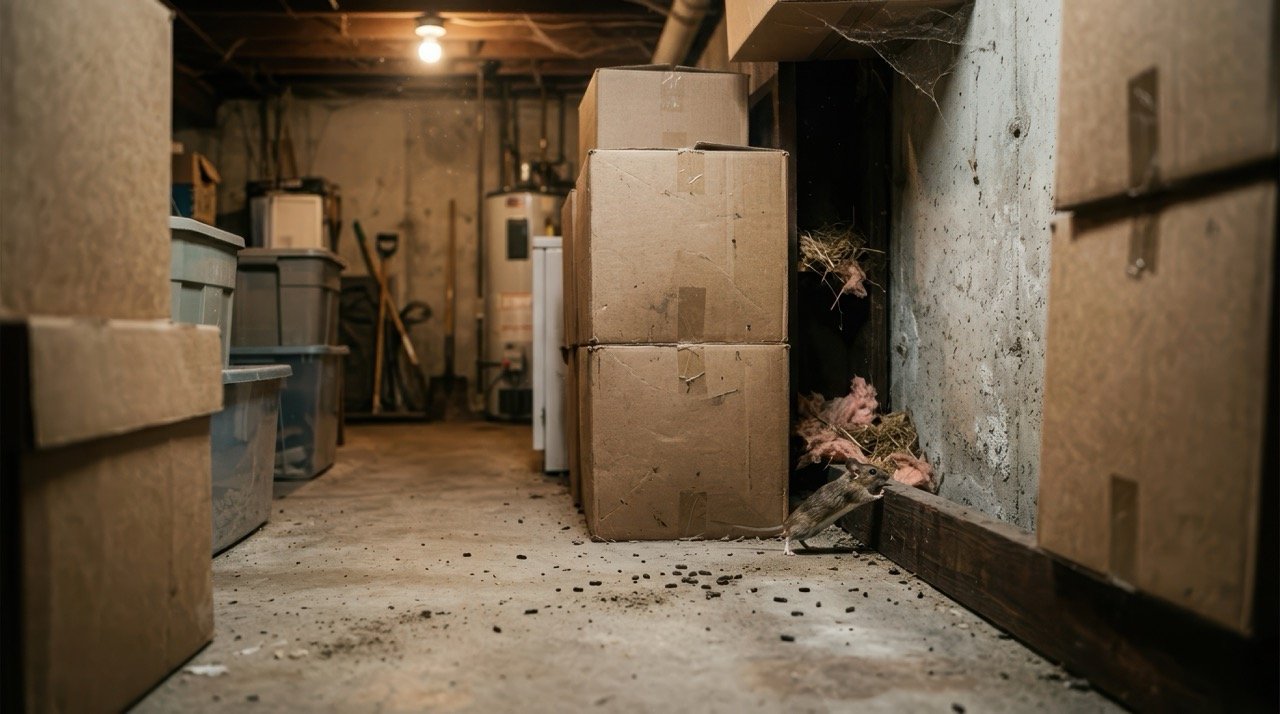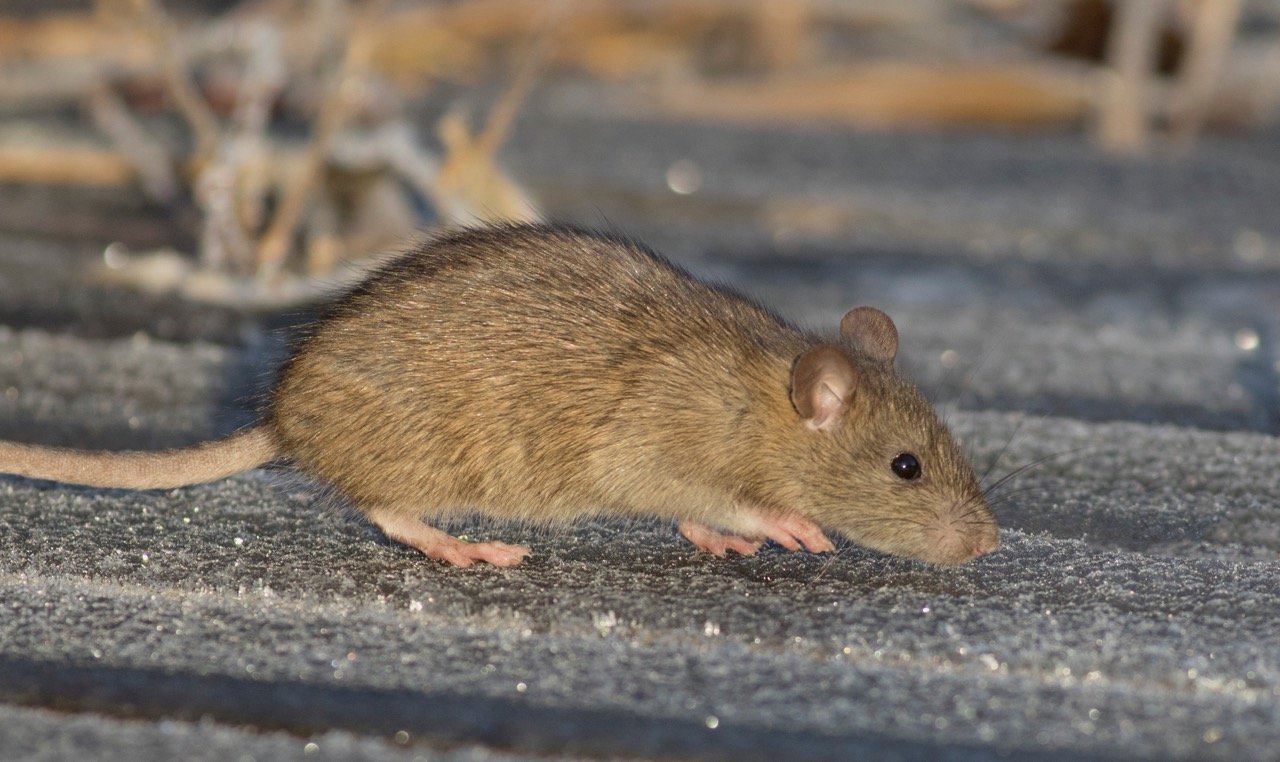
You turn on the porch light at night and, within minutes, insects seem to appear everywhere.
Some circle the bulb continuously. Others gather on the wall, land near the door, or eventually make their way inside when someone enters the house.
If you’ve noticed bugs around outdoor lights, you’re seeing a common interaction between insects, artificial light, and the environment around your home.
Many insects respond to light in different ways. Exterior lighting can influence their movement, particularly after dark, and may concentrate insects around doors, windows, patios, garages, and other outdoor living spaces.
For Florida homeowners, where warm temperatures can support insect activity throughout much of the year, outdoor lighting may make that activity especially noticeable.
But why do bugs gather around lights, which insects are you actually seeing, and what can you do to reduce the problem?
Why Are Bugs Attracted to Outdoor Lights?
The relationship between insects and artificial light is complex.
Different insects respond to light for different reasons, and scientists continue to study exactly how artificial lighting interferes with insect navigation and behavior.
What homeowners need to know is simpler:
Certain outdoor lights can cause insects to gather around a concentrated area.
Once insects are around your porch, patio, or doorway, you may notice much more pest activity than you would in a darker section of the property.
The light isn’t necessarily creating the insects.
It may simply be concentrating existing activity where you can see it.
What Types of Bugs Gather Around Outdoor Lights?
The exact insects vary depending on location, season, weather, and environmental conditions.
You may notice:
- Moths.
- Beetles.
- Small flying insects.
- Mosquitoes.
- Flies.
- Winged ants.
- Termite swarmers.
- Other nighttime insects.
Not every insect around a light represents a pest infestation.
Many may simply be passing through the outdoor environment.
However, repeated or unusually heavy activity may give you useful information about what’s happening around the property.
Why Are There So Many Bugs Around My Porch Light?
Location matters.
A porch light is often positioned beside one of the largest openings into your home: the front door.
It may also be surrounded by:
- Plants.
- Landscaping.
- Moisture.
- Covered areas.
- Windows.
- Cracks and gaps.
All of these conditions can influence pest activity.
The result is a location where insects may gather and then have opportunities to enter the house.
Can Outdoor Lights Bring Bugs Into the House?
Indirectly, yes.
An insect gathered near a door has a much easier opportunity to enter when that door opens.
Others may find small gaps around:
- Door frames.
- Windows.
- Screens.
- Weatherstripping.
If you regularly find flying insects indoors near an exterior door, inspect both the lighting outside and the physical condition of the entryway.
The problem may involve attraction plus access.
Are Mosquitoes Attracted to Outdoor Lights?
Mosquito behavior isn’t based on light alone.
Mosquitoes use multiple cues when locating hosts and navigating their environment.
That means switching off a porch light won’t necessarily eliminate mosquitoes from your backyard.
If mosquito activity is high, inspect the broader property for:
- Standing water.
- Dense vegetation.
- Shaded resting areas.
- Irrigation problems.
- Poor drainage.
Outdoor lighting may influence where you notice insect activity, but mosquito control requires a broader approach.
Why Are Moths Always Flying Around Lights?
Moths are among the insects most commonly associated with outdoor lighting.
You may see them repeatedly circling a fixture or resting on nearby walls.
For homeowners, the primary concern usually isn’t the moth itself.
The larger issue is that concentrations of insects around lights can affect other pest activity.
For example, predators may begin taking advantage of the available food source.
Can Outdoor Lights Attract Spiders?
The light itself isn’t necessarily what a spider wants.
The insects around it are.
If porch lights consistently attract flying insects, spiders may build webs nearby because the location provides feeding opportunities.
This can explain why you repeatedly remove a web near an exterior light only to find another one later.
Instead of focusing exclusively on the spider, look at the insect activity supporting it.
Reducing the number of insects gathering in that location may also make the area less attractive to spiders.
What About Frogs and Other Animals Near Lights?
The same food-chain effect can extend beyond spiders.
Areas with concentrated insect activity may attract animals that feed on insects.
This doesn’t necessarily indicate a pest problem inside your home.
It demonstrates how exterior lighting can change activity around a particular area of the property.
Why Are Bugs Worse Around Lights After Rain?
Rain can change outdoor insect activity significantly.
It can create standing water, increase moisture, and alter environmental conditions throughout your yard.
After rain, you may notice more flying insects around lights because overall insect activity has increased.
Florida’s combination of warm weather and periods of heavy rainfall can make these changes particularly noticeable.
If outdoor insect activity suddenly increases after rain, inspect the property for newly created water sources as well.
Can Termites Fly Around Outdoor Lights?
This is one situation homeowners should pay attention to.
Termite swarmers are winged reproductive termites that leave established colonies during swarming events.
They may be noticed around lights.
However, flying ants can also gather around illuminated areas and may look similar to termite swarmers.
If you discover large numbers of winged insects near exterior lights, don’t immediately assume you have termites inside the house.
Instead:
- Take clear photographs.
- Preserve a specimen if possible.
- Look for discarded wings.
- Note where the insects appeared.
- Consider professional identification.
Outdoor termite swarmers can indicate termite activity in the surrounding environment without automatically proving your structure is infested.
Indoor swarm activity deserves closer investigation.
How Can You Tell Flying Ants From Termites?
Flying ants and termite swarmers can be difficult for homeowners to distinguish at a glance.
There are differences in body shape, antennae, and wings, but identifying a moving insect around a light isn’t always easy.
If the distinction matters because you’re concerned about termite activity, save a specimen rather than relying on memory.
Professional identification can prevent unnecessary worry or help identify a problem that deserves inspection.
Do Bugs Around Lights Mean My House Is Infested?
Usually, not by themselves.
Outdoor insect activity is normal.
Your yard is part of an ecosystem containing insects throughout the year.
A few moths, beetles, or other insects around a light don’t automatically indicate an indoor infestation.
Concern becomes more reasonable when you also notice:
- Large numbers of insects indoors.
- Repeated activity from the same structural area.
- Termite warning signs.
- Ant trails entering the home.
- Damaged screens.
- Visible gaps.
- Other evidence of pest activity.
Context matters.
Can Changing Outdoor Lights Reduce Bug Activity?
Different lighting characteristics can influence insect attraction.
Brightness, wavelength, fixture placement, and how long lights remain on may all affect the number of insects gathering around an area.
For homeowners, practical strategies may include reducing unnecessary nighttime lighting and reconsidering fixture placement where appropriate.
The goal doesn’t have to be eliminating exterior lighting.
Outdoor lighting is useful for visibility, convenience, and property use.
Instead, use it intentionally.
Should You Leave Outdoor Lights Off?
If a light isn’t needed, turning it off can reduce unnecessary nighttime illumination.
However, homeowners may want exterior lighting for many legitimate reasons.
You don’t have to choose between a completely dark property and constant insect activity.
Consider when and where lighting is actually necessary.
Timers, motion-activated lighting, and thoughtful placement may help reduce the amount of time certain exterior areas remain continuously illuminated.
Can Moving a Light Away From the Door Help?
Fixture placement can matter.
When a bright light is located immediately beside a frequently opened door, insects gathering around it are already positioned near an entrance.
Where property design allows, lighting choices and placement can be considered as part of broader pest prevention.
This doesn’t mean every homeowner needs to relocate electrical fixtures.
But if you’re renovating or changing exterior lighting, pest activity is one factor worth considering.
What About Indoor Light Shining Through Windows?
At night, bright interior lighting can also be visible through windows.
If screens are damaged or windows are open, insects may have opportunities to enter.
Check:
- Window screens.
- Screen doors.
- Gaps around frames.
- Frequently opened windows.
Physical barriers remain one of the simplest ways to keep outdoor insects outside.
Check the Door Near Your Outdoor Light
If insects gather around a porch light, inspect the nearby door.
Look at:
- Weatherstripping.
- Door sweeps.
- Frame gaps.
- Screen doors.
- Thresholds.
Visible daylight around a closed exterior door may indicate a gap that deserves attention.
Reducing attraction is helpful, but eliminating easy access is just as important.
Keep Landscaping Around Lights Maintained
Exterior lights are often installed near landscape beds, patios, and entryways.
Dense vegetation can provide:
- Shade.
- Resting areas.
- Moisture.
- Shelter.
When combined with artificial light, these conditions may produce a particularly active insect zone.
Maintain shrubs and plants appropriately and avoid allowing vegetation to completely cover exterior fixtures or structural inspection areas.
Standing Water Can Make the Situation Worse
If your outdoor lights are surrounded by mosquitoes and other flying insects, don’t forget to inspect for water.
Check:
- Plant saucers.
- Gutters.
- Buckets.
- Toys.
- Tarps.
- Outdoor furniture covers.
- Drainage areas.
The light may be where you notice the insects.
The water may be where part of the underlying activity is being supported.
Clean Outdoor Fixtures
Light fixtures can accumulate:
- Dead insects.
- Spider webs.
- Dirt.
- Organic debris.
Regular cleaning can keep exterior areas maintained and make it easier to notice new pest activity.
Always turn off electrical power as appropriate and follow safe cleaning practices for the fixture.
If electrical repair is required, use a qualified professional.
Why Bug Zappers Aren’t the Whole Solution
Homeowners sometimes respond to outdoor insects by immediately installing a device intended to kill flying bugs.
But reducing individual insects near a fixture doesn’t address all of the environmental conditions around the property.
If your yard still contains:
- Standing water.
- Dense vegetation.
- Structural gaps.
- Damaged screens.
- Moisture problems.
you may continue experiencing pest activity.
Effective prevention looks at the whole environment.
How Can You Reduce Bugs Around Outdoor Lights?
Start with a combination of lighting management and general pest prevention.
Turn Off Unnecessary Lights
Avoid keeping exterior areas continuously illuminated when lighting isn’t needed.
Consider Light Placement
Where practical, avoid concentrating insect activity immediately beside frequently opened entrances.
Repair Screens
Replace or repair damaged window and door screens.
Inspect Door Seals
Look for gaps around exterior doors.
Manage Landscaping
Keep dense vegetation appropriately maintained.
Remove Standing Water
Regularly inspect the yard, particularly after rainfall.
Clean Fixtures
Remove accumulated insects, webs, and debris.
Watch for Unusual Activity
Large numbers of winged ants or suspected termite swarmers deserve identification.
These measures can help reduce both attraction and opportunities for insects to enter the home.
When Should You Call Pest Control?
Professional pest control may be useful when insect activity around your home is accompanied by other signs of a pest problem.
Consider an inspection if:
- Large numbers of insects are entering the house.
- You repeatedly find suspected termite swarmers.
- Ants are establishing trails indoors.
- Spider activity is becoming excessive.
- Mosquitoes make outdoor spaces difficult to use.
- You can’t identify the insects you’re seeing.
- Pest activity continues despite prevention efforts.
The goal is to determine whether you’re dealing with normal outdoor insect activity or a larger pest issue requiring attention.
Outdoor Lights May Be Showing You More Than You Realize
So, why are there so many bugs around outdoor lights?
Artificial lighting can influence insect behavior and concentrate activity in areas where homeowners are most likely to notice it.
But the light may only be one piece of the puzzle.
Vegetation, standing water, rainfall, structural gaps, damaged screens, and other environmental conditions may all contribute.
Instead of simply eliminating every insect that flies near a bulb, look at the area as a whole.
Where is the light located?
What is growing nearby?
Is water collecting anywhere?
Are insects entering through the nearby door or window?
Are spiders building webs because flying insects are consistently available?
Those observations can turn an annoying nighttime problem into useful information about pest activity around your property.
Contact 911 Home Helps Today
Are bugs gathering around your outdoor lights or finding their way inside your Florida home? 911 Home Helps can inspect your property, identify pest activity, and recommend an appropriate control and prevention strategy.