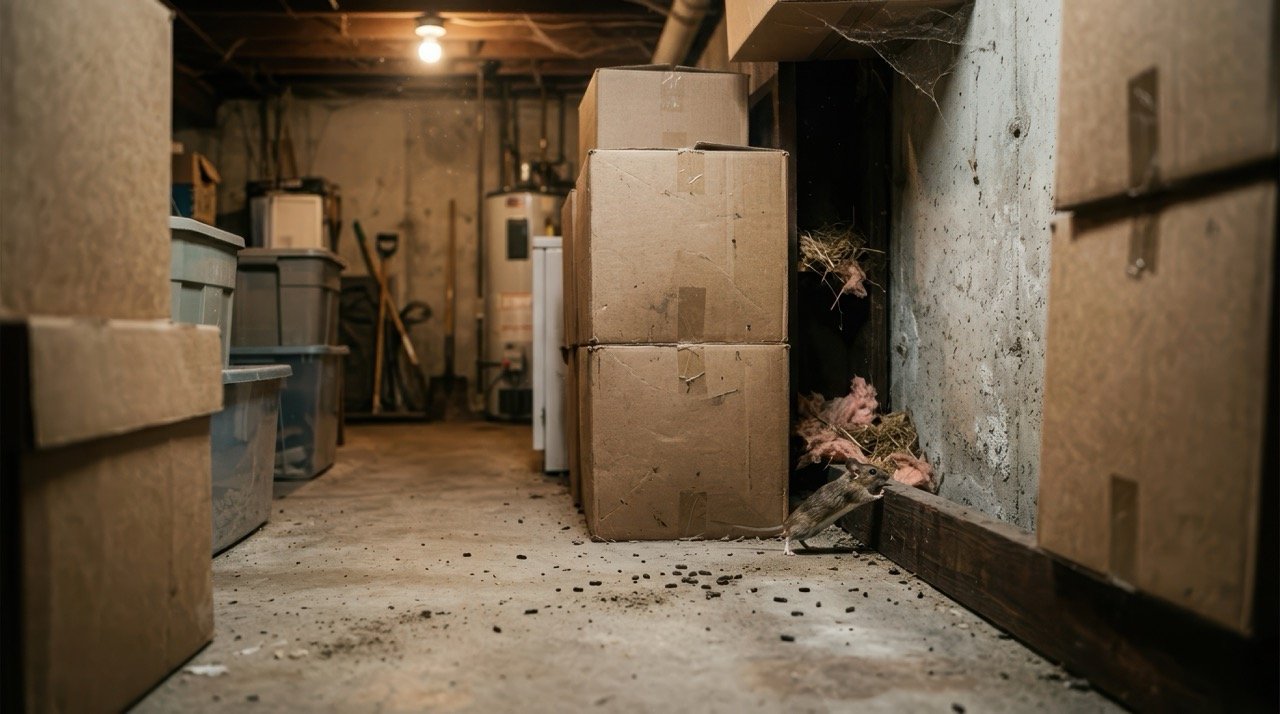
When homeowners think about rats getting into a house, they often imagine rodents entering through a gap near the ground, squeezing beneath a garage door, or finding an opening around the foundation.
But what if the signs of rodent activity are coming from the attic?
Can rats actually get all the way up there?
And can rats climb walls to reach the roof?
Rats can be capable climbers, although their ability to scale a particular surface depends on its texture, construction, surrounding objects, and the rodent involved. They may also use trees, fences, pipes, vegetation, and other structures to reach elevated portions of a property.
Once near the roofline, existing gaps around vents, eaves, soffits, or other structural areas may provide opportunities to enter.
For Florida homeowners dealing with scratching noises or other signs of rodents above the living space, inspecting only ground-level entry points may therefore miss an important part of the problem.
Can Rats Climb Walls?
Some rats are skilled climbers.
However, that doesn’t mean every rat can effortlessly climb every wall.
A smooth vertical surface may be difficult to scale, while textured materials and nearby structural features can provide much more grip.
The surrounding environment matters too.
A rat doesn’t necessarily need to climb directly from the ground to the roof.
It may use several objects along the way.
Potential pathways include:
- Trees.
- Fences.
- Pipes.
- Exterior structures.
- Dense vegetation.
- Utility-related structures.
- Rough building surfaces.
That’s why rodent prevention should evaluate the entire exterior rather than simply looking for holes at ground level.
Why Would Rats Climb Onto a Roof?
Like other pests, rats are looking for resources.
A roof may provide access to one of the most attractive locations in a home: the attic.
Attics can offer:
- Shelter.
- Protection from weather.
- Quiet nesting areas.
- Insulation and other nesting materials.
- Limited human activity.
If a rat discovers a pathway toward the roof and an opening into the structure, an attic can become an appealing place to remain.
Can Rats Get Into the Attic From the Roof?
Yes, if an accessible structural opening exists.
The roof itself doesn’t need to have a large obvious hole.
Potential vulnerabilities can occur around:
- Roof vents.
- Soffits.
- Eaves.
- Damaged exterior components.
- Gaps where building materials meet.
- Other roofline openings.
These areas may be difficult to see from the ground.
If you suspect rodents are entering through an elevated location, avoid climbing onto the roof unless you’re properly equipped and qualified to do so.
A professional inspection can evaluate areas that aren’t safely accessible to homeowners.
Can Tree Branches Help Rats Reach the Roof?
Trees are one of the most important exterior features to consider when investigating roof access.
Branches extending close to a home can create pathways toward:
- Roof edges.
- Gutters.
- Eaves.
- Upper exterior walls.
A rat may use the tree rather than climbing the house itself.
This is why tree maintenance can be part of a rodent prevention strategy.
It isn’t about removing every tree from your yard.
Instead, look for branches creating convenient direct connections to the structure and maintain them appropriately.
Can Rats Climb Fences?
Certain rodents can navigate fences, particularly when the surface provides grip or nearby objects make movement easier.
A fence may also connect different areas of the yard.
If it meets vegetation, outdoor structures, or other features close to the home, it can become part of a broader travel route.
This doesn’t mean every fence needs modification.
The important thing is to look at the complete pathway.
Ask yourself:
If a rodent were traveling through this area, what could it use next?
Can Rats Climb Pipes?
Depending on the surface and configuration, pipes and other vertical or angled structures may provide climbing opportunities.
Again, the important point isn’t that every pipe automatically becomes a rodent highway.
It’s that homeowners shouldn’t assume elevated areas are inaccessible simply because they’re above ground level.
During a rodent inspection, exterior structural features should be considered together.
What About Gutters and Downspouts?
Gutters and downspouts are part of the roof system and may be located near other pathways rodents can use.
Even if a rodent isn’t climbing a particular component directly, nearby trees, walls, fences, or structures may allow it to reach the gutter or roofline.
Keep these areas maintained and monitor for damage.
Roof drainage problems can also contribute to moisture issues, making regular maintenance valuable beyond rodent prevention.
Can Rats Jump Onto the Roof?
Rodents can move between nearby surfaces, but homeowners shouldn’t focus on trying to calculate an exact jumping distance.
The practical question is whether your property contains easy connections between exterior objects and the home.
Look for:
- Branches near the roof.
- Structures close to exterior walls.
- Fences connecting to elevated areas.
- Stored materials near the house.
Reducing convenient pathways can make access more difficult.
Why Are Rats in My Attic If My Garage Is Sealed?
A well-sealed garage is useful, but it doesn’t eliminate every possible rodent entry point.
If rats are reaching the attic from above, garage-level prevention alone won’t solve the problem.
This illustrates why rodent exclusion needs to consider:
- Ground-level openings.
- Roofline vulnerabilities.
- Vegetation.
- Utility penetrations.
- Exterior structures.
Homes have multiple levels and many possible access routes.
What Are the Signs of Rats in the Attic?
You may not see the rodents themselves.
Possible signs include:
- Scratching or scurrying sounds.
- Droppings.
- Gnaw marks.
- Damaged insulation.
- Nesting materials.
- Unusual odors.
- Disturbed stored belongings.
Sounds may be particularly noticeable when the house is quiet.
However, attic noises don’t automatically confirm rats. Other animals and even normal building movement can produce sounds.
Additional evidence can help determine the source.
Why Do Rats Gnaw on Materials?
Rodents are known for gnawing.
If rats enter structural spaces, homeowners may discover damage to stored materials, wood, plastic, or other items.
Wiring damage can also be a concern when rodents occupy attics or other concealed areas.
If you discover damaged electrical components, avoid attempting unsafe repairs yourself.
Contact the appropriate qualified professional.
Can Rats Move From the Attic Into Other Parts of the House?
Once rodents enter a structure, they may explore connected areas.
Attics, wall voids, garages, and other structural spaces can provide pathways.
This doesn’t mean a rat in the attic will necessarily appear in your kitchen.
However, established indoor activity should be addressed rather than assuming the animal will remain permanently in one area.
Why Do Rats Keep Coming Back to the Roof?
If rodents repeatedly appear around the same area, there may be something making the route worthwhile.
Potential factors include:
- An accessible opening.
- Shelter.
- Nearby food sources.
- Trees providing access.
- Water.
- A previously established nesting area.
Simply chasing a rat away from the roof doesn’t change those conditions.
The property needs to be evaluated for both attraction and access.
What Attracts Rats to Your Property in the First Place?
Before a rat reaches your roof, something may have encouraged it to spend time around your property.
Common attractants include:
- Garbage.
- Pet food.
- Bird seed.
- Fallen fruit.
- Outdoor food residue.
- Water sources.
- Dense vegetation.
- Clutter.
Reducing these resources can help make the property less appealing.
But attractant control and structural exclusion should work together.
Removing food without addressing an attic opening leaves the home vulnerable.
How Can You Help Prevent Rats From Reaching the Roof?
Start by looking at the exterior as a connected system.
Maintain Trees
Evaluate branches that extend toward or touch the structure.
Inspect Vegetation
Dense plants may provide cover and pathways.
Look at Exterior Structures
Consider whether fences, sheds, or other features create easy connections toward the home.
Inspect the Roofline
Look for visible damage from a safe location and arrange professional evaluation when necessary.
Check Vents
Damaged protective components can create vulnerabilities.
Maintain Soffits and Eaves
Deteriorated materials should be repaired appropriately.
Reduce Rodent Attractants
Secure garbage, pet food, bird seed, and other food sources.
The goal is to make the entire route—from yard to roof to attic—more difficult.
Should You Seal Roof Openings Yourself?
Some repairs may appear straightforward, but roof work introduces safety risks.
There is another issue as well.
If rodents are already inside the attic, immediately sealing suspected openings without understanding how the animals are entering and exiting can create additional problems.
Before extensive exclusion, determine:
- Whether rodents are currently inside.
- Which openings they’re using.
- Where activity is concentrated.
- How existing rodents will be addressed.
Then structural repairs can be coordinated appropriately.
Don’t Seal Rats Inside the Attic
Finding a likely entry point can make homeowners want to close it immediately.
But if rats are already living inside, sealing their exit without a control plan may trap them within the structure.
This can result in rodents searching for alternative routes.
Rodent exclusion is therefore more than simply finding a hole and filling it.
The sequence matters.
Are Traps Enough If Rats Are Getting Through the Roof?
Trapping may address individual rodents, but it doesn’t repair the pathway that allowed them inside.
If the roofline remains accessible and food or shelter continues attracting rats to the property, new activity may occur.
A broader strategy considers:
- Current rodent activity.
- Food and water sources.
- Exterior pathways.
- Structural entry points.
- Exclusion.
- Ongoing monitoring.
Addressing only one part can leave the larger problem unresolved.
What If You See a Rat Running Along the Roof?
Document where you saw it if possible.
Pay attention to where the animal came from and where it went.
Did it approach from a tree?
Did it disappear near an eave?
Was it traveling toward a neighboring property?
That information may help identify a potential route.
A single outdoor sighting doesn’t automatically prove the rat entered your home, but it gives you a reason to inspect for vulnerabilities.
When Should You Call a Pest Control Professional?
Professional rodent control may be appropriate when:
- You hear scratching in the attic.
- Droppings are present in upper structural areas.
- You see rats on the roof repeatedly.
- You find damaged insulation or nesting material.
- You can’t identify the entry point.
- Roof access makes inspection unsafe.
- DIY trapping hasn’t resolved the activity.
- Rodents repeatedly return.
A professional inspection can evaluate both the rodent activity and the pathways that may be allowing rats to reach the home.
Rodent Prevention Means Looking Up, Too
So, can rats climb walls?
Some rats are capable climbers, particularly when surfaces and surrounding structures provide opportunities.
But the bigger lesson is that rats don’t necessarily need to climb straight up your exterior wall.
Trees, fences, pipes, vegetation, and other structures can create alternative routes toward the roof.
Once there, openings around eaves, soffits, vents, and other roofline areas may provide access to an attic.
That’s why a complete rodent inspection shouldn’t stop at the foundation.
Look around.
Look behind.
And sometimes, look up.
Contact 911 Home Helps Today
Hearing scratching in your attic or concerned that rats may be reaching your Florida home’s roof? 911 Home Helps can inspect your property for rodent activity, identify potential access routes and entry points, and recommend an appropriate rodent control and exclusion strategy.