After a heavy rainstorm in Florida, you might notice dozens of small, dark, worm-like creatures crawling across your patio, gathering near your front door, or moving along the walls of your home.
Some may even find their way into bathrooms, garages, or laundry rooms.
These creatures are often millipedes, and their sudden appearance can be surprising, especially when they seem to arrive overnight.
Although millipedes are generally harmless to people and do not cause structural damage, finding large numbers of them indoors can be frustrating.
So, why are millipedes entering your house after rain?
The answer often involves changes in soil moisture, outdoor habitat conditions, and small openings that allow these creatures to move inside.
For Florida homeowners, understanding millipede behavior can help reduce recurring activity and make the property less attractive to unwanted pests.
What Are Millipedes?
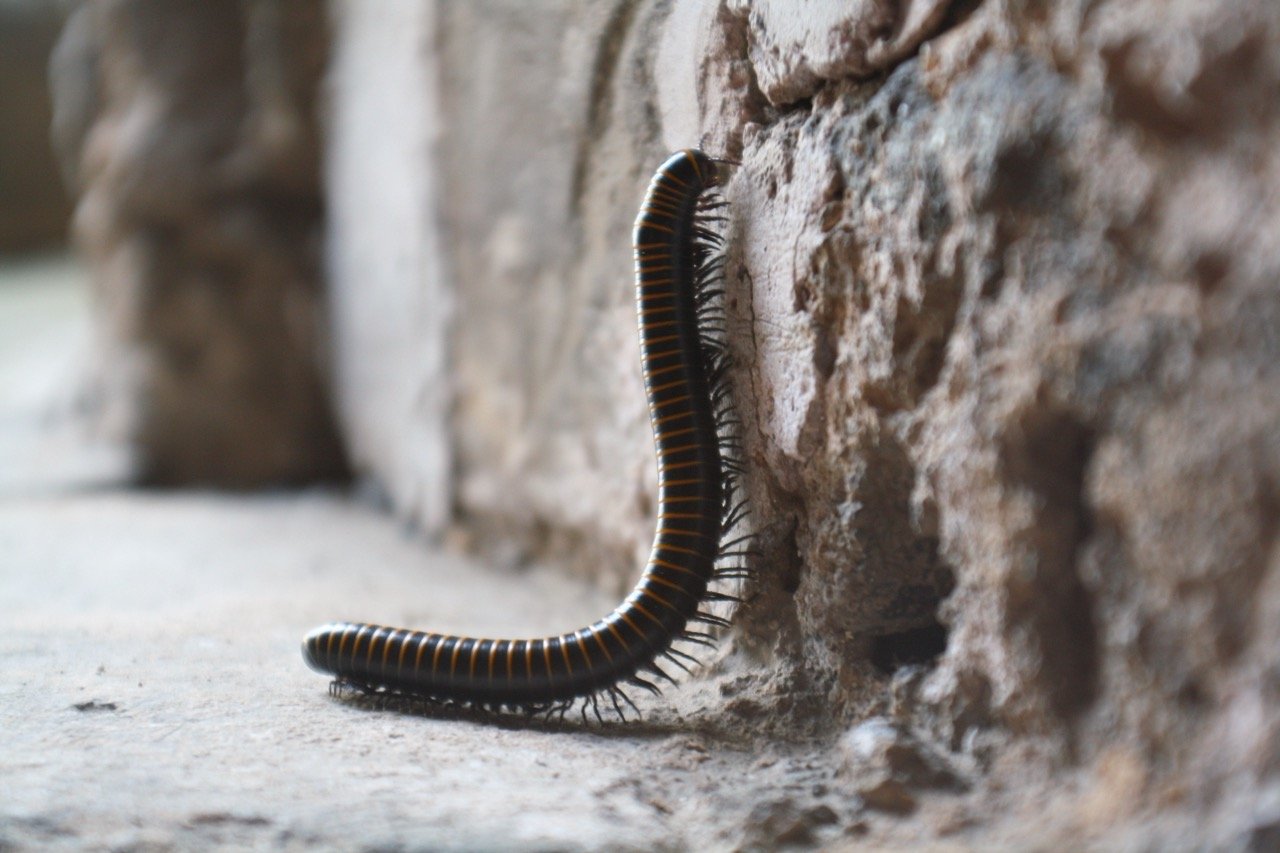
Millipedes are arthropods belonging to the class Diplopoda.
They have elongated bodies made up of numerous segments, with most body segments bearing two pairs of legs.
Despite their name, most millipedes do not have exactly one thousand legs.
The number of legs varies by species and developmental stage.
Millipedes are commonly found in outdoor environments where moisture and decomposing organic material are available.
They play an important ecological role by helping break down dead leaves and other plant debris.
Most species feed primarily on decaying vegetation rather than living household materials.
Although they may occasionally enter buildings, millipedes are generally outdoor organisms.
Why Are Millipedes Entering Your House After Rain?
Heavy rainfall can significantly change the conditions in which millipedes live.
These arthropods depend on moisture, but excessively wet or flooded environments may disrupt their normal habitats.
When soil becomes saturated, millipedes may move away from their usual hiding places.
This movement can bring them toward patios, sidewalks, foundations, and exterior walls.
If accessible gaps are present, some may enter the house.
However, rain is not the only factor that influences their movement.
Millipedes may also become more noticeable during periods of seasonal activity, changes in temperature, or other environmental disturbances.
In many cases, indoor sightings reflect movement from nearby outdoor populations rather than reproduction inside the home.
Are Millipedes Common in Florida?
Millipedes occur throughout Florida in a variety of outdoor habitats.
The state’s warm temperatures, frequent rainfall, and landscaped residential environments can provide favorable conditions for many species.
Gardens, mulch beds, leaf litter, and shaded soil may support millipede activity.
However, their abundance varies depending on the species and local environmental conditions.
Properties with dense vegetation and consistently moist landscaping may experience more frequent encounters.
Florida homeowners may notice increased movement during rainy periods, especially when outdoor populations are already established nearby.
What Attracts Millipedes to Your Home?
Millipedes are primarily attracted to environments that provide moisture, shelter, and suitable organic material.
Several conditions around a property may encourage their presence.
Moist Soil
Millipedes require moisture to avoid drying out.
Persistently damp soil can provide favorable conditions, particularly in shaded locations.
Mulch Beds
Mulch can retain moisture and provide decomposing organic material.
These conditions may support millipedes and other organisms involved in decomposition.
Fallen Leaves
Leaf litter offers both shelter and food for many millipede species.
Large accumulations of leaves may create protected habitats close to a building.
Decaying Wood
Rotting logs, wood debris, and other decomposing plant materials can provide suitable outdoor environments.
Shaded Landscaping
Areas beneath dense plants, shrubs, and other vegetation may remain moist for longer periods.
These protected locations can support millipede activity.
Accessible Entry Points
Gaps beneath doors, cracks around foundations, and openings near utility lines may allow millipedes to enter buildings.
The presence of suitable outdoor habitats becomes more relevant when these openings are nearby.
Why Do Millipedes Gather Around Doors?
Millipedes may accumulate near doors when they move across patios, walkways, or exterior walls.
Door thresholds can create sheltered edges where the animals gather.
If weatherstripping is damaged or a door sweep does not fit properly, millipedes may pass through the opening.
Exterior lighting can also make their presence more noticeable, although millipedes are not typically attracted to lights in the same way as many flying insects.
If you repeatedly find millipedes near one entrance, inspect the surrounding landscaping, moisture conditions, and door seals.
Can Millipedes Enter Through Windows?
Yes.
Millipedes may enter through accessible openings around windows, especially those located close to ground level.
Damaged screens, gaps in frames, and poorly sealed openings can provide entry opportunities.
However, millipedes do not generally seek out windows as a preferred habitat.
They are more likely to enter accidentally while moving around the exterior of a building.
Maintaining screens and sealing appropriate gaps can help reduce these encounters.
Why Are Millipedes in My Bathroom?
Bathrooms can provide relatively humid environments.
However, finding millipedes in a bathroom does not necessarily mean they are breeding there.
They may have entered through nearby openings and moved toward a protected or damp location.
Repeated sightings should prompt an inspection of accessible entry points and moisture conditions.
If plumbing leaks or persistent dampness are present, addressing them may help make the area less favorable.
Do Millipedes Come From Drains?
Millipedes are not typical drain-breeding pests.
They generally develop in outdoor soil and organic material rather than inside household plumbing.
If you find one near a shower or sink, it may have entered from another location.
However, damaged plumbing connections or openings around pipes can sometimes provide access routes for small arthropods.
If insects or other creatures repeatedly appear around a fixture, inspect the surrounding area rather than assuming they are emerging from the drain itself.
Are Millipedes Dangerous to Humans?
Most millipedes are not considered dangerous to people.
They do not have venomous fangs like centipedes and are not known for biting humans.
However, some species release defensive chemicals when disturbed.
These secretions may irritate the skin or eyes and can sometimes cause temporary discoloration.
Avoid handling millipedes with bare hands.
If you accidentally come into contact with their defensive secretions, wash the affected skin with soap and water.
Avoid touching your eyes.
Seek medical attention if significant irritation or other concerning symptoms develop.
Do Millipedes Bite?
Millipedes are not known for biting people.
Their mouthparts are adapted primarily for feeding on decaying organic material.
When threatened, many species curl into a spiral or release defensive secretions rather than attempting to bite.
This behavior helps distinguish them from centipedes, which are predators and may use venom-bearing appendages to subdue prey.
Although both groups have many legs, their behavior and potential risks differ.
Millipedes vs. Centipedes: What’s the Difference?
Millipedes and centipedes are often confused because both have elongated, segmented bodies and numerous legs.
However, they belong to different groups.
Millipedes typically have two pairs of legs on most body segments.
They often move relatively slowly and may curl into a spiral when disturbed.
Centipedes generally have one pair of legs per body segment.
They are predators and tend to move more quickly.
Some centipedes can deliver painful venomous stings using specialized appendages.
Correct identification is important because management recommendations and potential concerns may differ.
Can Millipedes Damage Your House?
Millipedes are not generally considered structural pests.
They do not feed on sound wood in the same way termites do.
They also do not normally damage wiring, furniture, or building materials.
Their primary food sources are associated with decomposing organic matter.
However, conditions that attract millipedes, such as persistent moisture near the foundation, may indicate maintenance issues worth addressing.
Improving drainage and reducing unnecessary dampness can benefit the property beyond pest prevention.
Can Millipedes Survive Indoors?
Most millipedes are poorly adapted to typical dry indoor conditions.
Without suitable moisture and food sources, many will eventually die after entering a building.
This is why homeowners sometimes discover dead millipedes along baseboards or near doors.
However, survival varies by species and indoor conditions.
A persistently damp environment may allow some individuals to survive longer.
Finding multiple millipedes indoors does not automatically mean they are reproducing there.
Repeated entry from outside is often a more likely explanation.
Why Are There So Many Millipedes at Once?
Millipedes sometimes appear in large numbers during periods of increased movement.
Environmental conditions, seasonal behavior, and local population levels can contribute to these events.
Heavy rain may displace individuals from saturated habitats.
At other times, dry conditions may also encourage movement as millipedes seek more favorable environments.
When many individuals move across a property, some may become trapped near exterior walls or enter through available openings.
A sudden increase in sightings is therefore not necessarily evidence of an indoor infestation.
How to Get Rid of Millipedes in Your House
Managing millipedes usually involves removing individuals that have entered and reducing the conditions that encourage repeated entry.
1. Remove Indoor Millipedes
A vacuum can be used to collect millipedes from floors and other accessible surfaces.
Avoid crushing them, as defensive secretions from some species may stain surfaces or cause irritation.
Dispose of collected material appropriately.
2. Inspect Doors and Windows
Check door sweeps, weatherstripping, and accessible gaps.
Repair damaged seals that may allow millipedes to enter.
3. Reduce Excess Moisture
Inspect areas where water accumulates near the foundation.
Repair leaking faucets and address drainage problems.
Avoid excessive irrigation that keeps landscaping continuously saturated.
4. Manage Mulch and Leaf Litter
Remove unnecessary accumulations of decomposing leaves and other organic debris close to the building.
Maintain mulch appropriately and avoid allowing it to cover vulnerable structural openings.
5. Improve Drainage
Ensure gutters and downspouts direct water away from the foundation where appropriate.
Persistent standing water or saturated soil may require landscaping or drainage improvements.
6. Consider Professional Pest Control
If millipedes repeatedly enter in large numbers, a professional inspection may help identify the source.
A pest control professional can evaluate entry points, outdoor habitats, and appropriate management options.
Does Salt Kill Millipedes?
Salt is sometimes suggested as a home remedy for millipedes.
However, spreading salt around a property is not a reliable long-term prevention strategy.
Excess salt can also harm plants and soil.
Rather than applying salt to landscaping, focus on managing moisture, removing unnecessary debris, and limiting entry opportunities.
Does Vinegar Repel Millipedes?
Vinegar is frequently promoted as a household insect repellent.
However, there is limited evidence that ordinary vinegar applications provide dependable, long-term millipede control.
Vinegar may also damage certain surfaces and plants.
Homeowners should avoid relying on unverified household remedies when a recurring problem is linked to environmental conditions.
Correcting those conditions is generally more useful.
Can Essential Oils Keep Millipedes Away?
Some essential oils are marketed as natural repellents.
However, their effectiveness against millipedes in residential settings is not consistently established.
Concentrated oils may also irritate people or pose risks to pets.
Natural products should not automatically be considered safe or effective.
For recurring millipede activity, appropriate exclusion and habitat management are better starting points.
Should You Use Pesticides for Millipedes?
Pesticides are not always necessary when only a few millipedes enter a home.
Environmental management may provide meaningful reductions in activity.
If pesticide treatment is considered, use only products labeled for the intended pest and application area.
Follow all safety instructions and applicable regulations.
Professional guidance may be useful when large numbers continue entering despite preventive measures.
How to Prevent Millipedes During Florida’s Rainy Season
Florida’s rainy season can create favorable moisture conditions for millipedes while also triggering increased movement.
Homeowners can reduce recurring problems by maintaining landscaping and inspecting areas where water accumulates.
Keep gutters and downspouts functioning properly.
Avoid overwatering garden beds.
Remove excessive leaf litter near exterior walls.
Maintain door sweeps and weatherstripping.
Inspect ground-level windows and accessible foundation openings.
These steps can help limit opportunities for millipedes to gather near and enter the home.
Do Millipedes Attract Other Pests?
Millipedes do not necessarily attract other pests directly.
However, the same environmental conditions that support millipedes may also favor other moisture-associated organisms.
Damp mulch, decaying vegetation, and protected outdoor spaces can provide habitats for a variety of arthropods.
Reducing excessive moisture and unnecessary debris may therefore help with broader pest prevention.
When Should You Call a Pest Control Professional?
Consider professional assistance if millipedes enter your home repeatedly or appear in unusually large numbers.
An inspection may be helpful when you cannot determine where they are coming from or when preventive maintenance has not reduced activity.
A professional can help distinguish millipedes from centipedes and other arthropods.
The appropriate management strategy depends on the species, surrounding habitat, and structural conditions.
Why Millipedes Enter Your House After Rain
If you’ve noticed millipedes entering your house after heavy rain, the activity may be related to saturated soil and changes in outdoor habitat conditions.
Millipedes are generally harmless decomposers that prefer moist environments rich in organic material.
Although they may become nuisance pests when they enter homes, they are not typically associated with structural damage or established indoor infestations.
Florida homeowners can help reduce recurring activity by improving drainage, managing mulch and leaf litter, and sealing appropriate entry points.
When large numbers continue appearing, professional pest control can help identify contributing conditions and recommend suitable solutions.
Contact 911 Home Helps Today
Are millipedes gathering around your doors, patio, or foundation after heavy rain? 911 Home Helps can inspect your property, evaluate moisture conditions and potential entry points, and recommend an appropriate pest control and prevention strategy.