Spending time in your backyard should be relaxing, whether you’re enjoying a barbecue, gardening, or simply sitting outside with your family. However, discovering wasps flying around your patio, gathering near your roof, or repeatedly visiting your outdoor dining area can quickly make you uncomfortable.
You may notice a few wasps investigating the same corner of your porch or flying beneath the roof overhang. In other situations, they seem particularly interested in your garbage containers, flowering plants, or outdoor food.
These encounters often leave homeowners wondering: What attracts wasps to your house?
Wasps are a diverse group of insects, and their behavior depends on the species, available food, nesting opportunities, and environmental conditions.
While many wasps provide ecological benefits by hunting other insects or visiting flowers, some species can become a concern when their nests are located close to areas frequently used by people.
For Florida homeowners, understanding why wasps gather around residential properties can help reduce unwanted encounters and support safer outdoor spaces.
What Are Wasps?
Wasps are insects belonging to the order Hymenoptera, which also includes bees and ants.
They vary considerably in appearance, size, behavior, and nesting habits.
Some species live independently, while others form colonies.
Social wasps, including certain paper wasps and yellowjackets, may defend their nests when disturbed.
Solitary wasps generally do not maintain large defensive colonies and are often less aggressive toward people.
Wasps can play important roles in the environment by preying on other insects and contributing to pollination.
However, nests established near doorways, patios, playgrounds, or other frequently occupied areas may create safety concerns.
Accurate identification is important because different wasp species require different management approaches.
What Attracts Wasps to Your House?
Several factors can encourage wasps to visit or establish nests around residential properties.
Food sources, water, sheltered nesting locations, and existing insect populations may all contribute to activity.
Not every wasp visiting your yard is looking for a place to build a nest.
Some may simply be searching for food or water.
Understanding the difference can help homeowners determine whether the insects are occasional visitors or part of an established colony.
1. Food and Sugary Drinks
One reason wasps gather around homes is the availability of food.
Certain social wasps may be attracted to sugary liquids, ripe fruit, and food scraps.
Outdoor meals can create opportunities for wasps to investigate exposed food and beverages.
Soda cans, juice containers, and uncovered desserts may attract attention from some species.
Food preferences can also change depending on the wasp species and the needs of the colony.
Reducing accessible food sources can help limit unwanted activity around outdoor dining areas.
2. Garbage Containers and Food Waste
Outdoor garbage containers may attract wasps when food residues are accessible.
Discarded fruit, sugary beverages, and other food scraps can provide attractive resources.
Containers that remain open or have poorly fitting lids may allow insects to investigate their contents.
Regularly cleaning garbage areas and securing waste containers can help reduce these opportunities.
However, wasps may still visit a property for other reasons even when garbage is properly managed.
3. Sheltered Nesting Locations
Some wasp species build nests in protected areas around buildings.
Roof overhangs, porch ceilings, eaves, and other sheltered surfaces may provide suitable attachment points.
Other species may nest in wall voids, cavities, or underground spaces.
The type of nesting site depends on the species.
For example, paper wasps often construct exposed, umbrella-shaped nests beneath protected structures.
Certain yellowjackets may establish colonies in underground cavities or enclosed spaces.
A suitable nesting location can attract wasps even when food sources are not immediately obvious.
4. Flowering Plants and Gardens
Wasps may visit flowering plants to obtain nectar or investigate insects living among the vegetation.
Many wasps contribute to natural pest control by hunting insects that feed on garden plants.
Therefore, seeing a wasp around flowers does not necessarily indicate a problem.
Some wasps are simply participating in normal ecological activity.
However, dense vegetation can make it harder to notice nests located near frequently used outdoor spaces.
Homeowners should inspect garden structures and surrounding areas carefully before performing maintenance.
5. Other Insects in Your Yard
Many wasps are predators that feed on or provision their young with other insects.
Caterpillars, flies, and other arthropods may serve as prey, depending on the species.
A yard with abundant insect activity may attract hunting wasps.
This does not necessarily mean the property has an infestation.
In fact, predatory wasps can help regulate certain insect populations.
However, repeated activity around a particular location may justify closer observation to determine whether a nest is nearby.
6. Water Sources
Like other living organisms, wasps require water.
Some species may collect water from birdbaths, fountains, pools, irrigation systems, or other accessible sources.
Water can also be used in nest-related activities, depending on the species.
A wasp visiting a birdbath is not necessarily nesting nearby.
Still, repeated activity around water features can increase the likelihood of encounters with people.
Maintaining outdoor water features and avoiding unnecessary standing water can support broader pest prevention.
7. Existing Nesting Activity
If a wasp colony becomes established near a home, workers may repeatedly travel through the surrounding area.
This can make the insects appear especially attracted to one particular doorway, roofline, or section of the yard.
A consistent flight path may indicate that wasps are entering and leaving a nearby nesting site.
However, homeowners should not approach or disturb a suspected nest to confirm its presence.
Professional identification is the safer option when the nest is located near people or pets.
Are Wasps Common in Florida?
Wasps are found throughout Florida.
The state’s climate supports a wide variety of insect species, including several types of social and solitary wasps.
Activity varies depending on species, season, weather, and local environmental conditions.
Warm temperatures may allow certain wasps to remain active for extended periods.
However, not every species follows the same seasonal pattern.
Residential landscapes, gardens, and structures can provide both food resources and nesting opportunities.
This is why wasps may be encountered in urban neighborhoods as well as more rural settings.
What Types of Wasps Are Found Around Florida Homes?
Several kinds of wasps may be encountered around residential properties.
Paper Wasps
Paper wasps are commonly recognized by their slender bodies and long legs.
They often construct open, paper-like nests beneath roof overhangs, porch ceilings, and other protected surfaces.
They can sting when their nests are threatened.
Yellowjackets
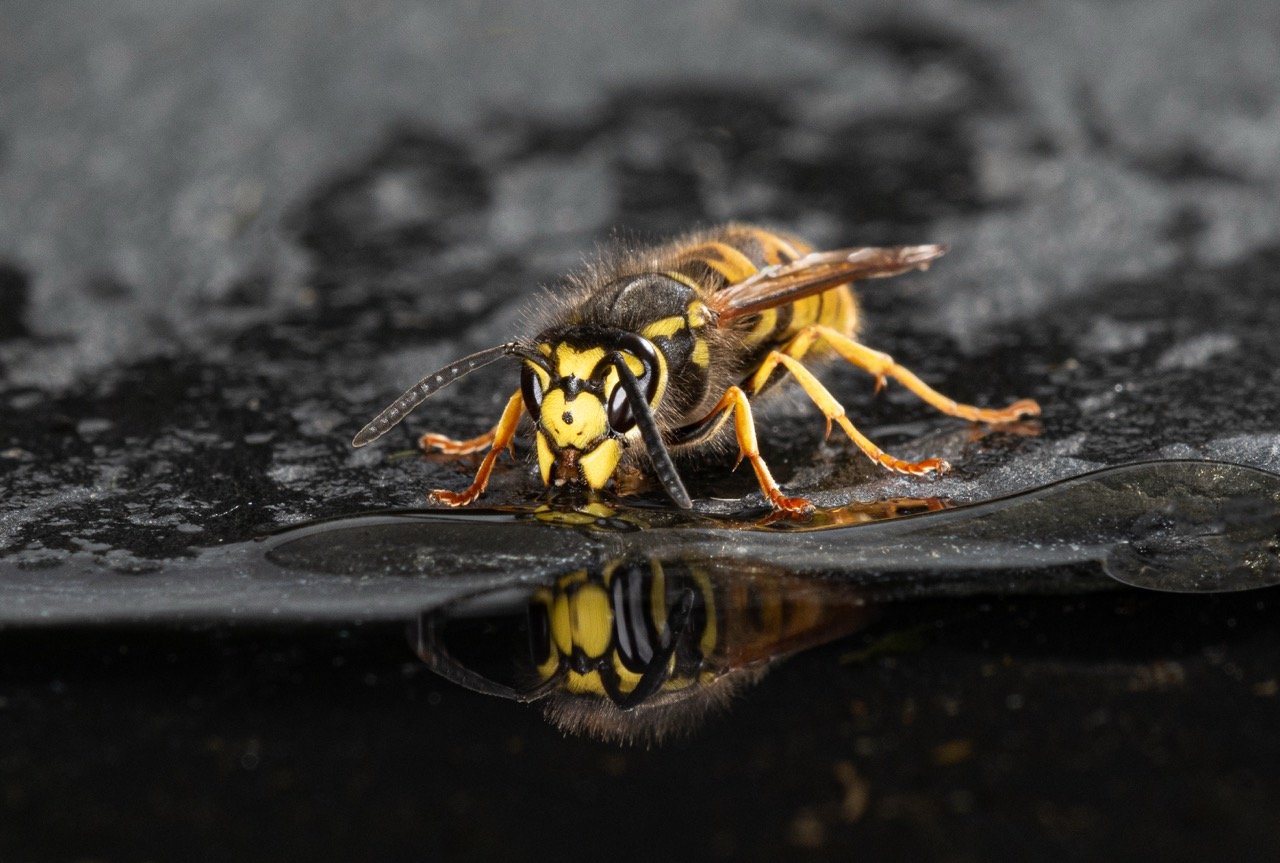
Yellowjackets are social wasps that may become particularly defensive near their colonies.
Depending on the species, nests may be located underground or inside enclosed cavities.
Some yellowjackets are attracted to food and sugary beverages around outdoor dining areas.
Mud Daubers
Mud daubers are generally solitary wasps that construct nests using mud.
They often provision their nests with spiders.
They are typically less defensive than social wasps, although they can sting if handled or threatened.
Cicada Killers
Cicada killers are large solitary wasps that may be seen around lawns and sandy soil.
Females dig nesting burrows and provision them with cicadas.
Despite their size, they are not generally aggressive toward people unless provoked.
Because these wasps differ in behavior, identification is essential before deciding whether control is necessary.
Why Do Wasps Build Nests Near Houses?
Residential structures can offer sheltered locations protected from direct rainfall and other environmental disturbances.
Eaves, rooflines, and enclosed cavities may provide suitable nesting opportunities for certain species.
Some wasps may also benefit from nearby food resources and landscaping.
However, wasps do not choose a house because they are specifically attracted to human activity.
They respond to environmental conditions that meet their biological needs.
A property may become suitable for nesting when protected spaces and appropriate resources are available.
How Can You Tell If Wasps Are Building a Nest?
One possible sign is repeated wasp movement toward the same location.
You may notice insects entering a small opening, gathering beneath an eave, or traveling along a consistent flight path.
An exposed paper nest may be visible in some situations.
However, nests inside wall cavities or underground spaces can be much harder to locate.
Avoid tapping walls, blocking openings, or disturbing areas where wasps appear to be entering.
These actions can provoke defensive behavior and increase the risk of stings.
If you suspect an active colony, contact a qualified pest control professional.
Are Wasps Dangerous?
Wasps can sting, and certain species may sting more than once.
For many people, a sting causes temporary pain, redness, and swelling.
However, some individuals experience severe allergic reactions.
Anaphylaxis is a medical emergency that may involve difficulty breathing, swelling of the throat, dizziness, or other serious symptoms.
Seek emergency medical care immediately if signs of a severe allergic reaction occur.
Wasps may be particularly defensive when their nests are disturbed.
For this reason, nest removal should not be attempted casually, especially when the nest is large, concealed, or located near frequently occupied areas.
Do Wasps Sting Without Being Provoked?
Wasps do not generally sting people simply because they are nearby.
However, behavior varies by species and circumstances.
Social wasps may respond defensively when they perceive a threat to their colony.
Sudden movements, accidental contact, or activities near a nest can increase the likelihood of an encounter.
A wasp searching for food may behave differently from one defending its nesting site.
Giving wasps space and avoiding disturbance can help reduce the risk of stings.
Why Are Wasps Flying Around My Porch?
Porches can provide sheltered nesting locations and access to food or water.
Wasps may investigate ceiling corners, railings, roof overhangs, and nearby vegetation.
If activity is occasional, the insects may simply be passing through.
Repeated movement toward the same structural location may suggest a nearby nest.
Observe from a safe distance rather than attempting to inspect a suspected colony closely.
If wasps are interfering with regular use of the porch, professional evaluation may be appropriate.
Why Are Wasps Attracted to My Pool?
Wasps may visit swimming pools and nearby water features to collect water.
They may also be attracted to food or sugary drinks left around outdoor seating areas.
Pool decks can become locations where people and wasps encounter one another.
Keeping food covered, promptly removing spills, and maintaining outdoor areas may help reduce unnecessary attractants.
However, eliminating all wasp visits to a pool area may not be realistic.
When repeated activity creates a safety concern, identifying nearby nesting sites may be useful.
Can Wasps Get Inside Your House?
Yes.
Individual wasps may enter through open doors, windows, damaged screens, or other accessible openings.
In some situations, wasps may establish nests in wall voids, attics, or other protected structural spaces.
Repeated indoor sightings may indicate that insects are entering from a nearby colony.
However, a single wasp indoors does not automatically mean a nest is present inside the building.
If wasps repeatedly appear in the same room, professional inspection may help identify the source.
What Should You Do If You Find a Wasp Nest?
The safest response depends on the species, nest location, and level of human activity nearby.
Avoid disturbing the nest.
Keep children and pets away from the area.
Do not attempt to knock down, burn, flood, or seal an active nest.
Blocking the entrance to a concealed nest may cause wasps to seek alternative routes, potentially including openings into occupied spaces.
If the nest is near a doorway, walkway, or other frequently used location, contact a qualified pest control professional.
A professional can evaluate the situation and determine whether removal or another management approach is appropriate.
How to Keep Wasps Away From Your House
Preventing unwanted wasp activity involves reducing accessible attractants and addressing potential nesting opportunities.
Keep Outdoor Food Covered
When eating outside, cover food and beverages when they are not being used.
Promptly remove leftovers and clean spills.
Secure Garbage Containers
Use containers with properly fitting lids.
Clean areas where food waste or sugary liquids accumulate.
Maintain Doors and Window Screens
Repair damaged screens and inspect accessible openings.
Appropriate exclusion measures may help reduce accidental indoor entry.
Inspect Outdoor Structures
Periodically observe eaves, porch ceilings, sheds, and other protected locations from a safe distance.
Early recognition of nesting activity may help homeowners seek professional guidance before a colony becomes difficult to manage.
Maintain Landscaping
Trim vegetation where necessary to keep walkways and frequently used outdoor spaces accessible.
Avoid disturbing areas with suspected nesting activity.
Seek Professional Assistance When Needed
If wasps repeatedly gather near occupied areas, a professional can help identify the species and evaluate whether treatment is necessary.
Do Fake Wasp Nests Keep Wasps Away?
Artificial wasp nests are sometimes marketed as deterrents.
However, there is limited reliable evidence that these products consistently prevent wasps from establishing colonies around residential properties.
Different wasp species have different nesting behaviors.
A decorative imitation nest should not be considered a dependable prevention strategy.
Maintaining outdoor areas and addressing actual nesting activity are more practical approaches.
Does Vinegar Repel Wasps?
Vinegar is often mentioned in homemade wasp control remedies.
However, ordinary vinegar applications are not a reliable way to prevent wasps from nesting around a property.
Spraying household mixtures at an active nest can also provoke defensive behavior.
Avoid experimenting with homemade treatments near wasp colonies.
When a nest presents a safety concern, professional management is the better option.
Do Essential Oils Keep Wasps Away?
Some essential oils are promoted as insect repellents.
However, their effectiveness against wasps in real residential settings varies and is not consistently established.
Concentrated oils may also irritate people, affect pets, or damage surfaces.
Natural origin does not guarantee safety.
Homeowners should not rely on essential oils to manage an active wasp colony.
Should You Remove Every Wasp Nest?
Not necessarily.
Many wasps are beneficial predators, and some solitary species rarely create significant problems for homeowners.
A nest located away from people and pets may not require intervention.
However, social wasp colonies near entrances, playgrounds, or frequently occupied areas may present greater concerns.
The decision should consider the species, nest location, activity level, and potential exposure of people.
Professional identification can help determine an appropriate response.
Can Wasps Return After Nest Removal?
Yes.
Removing a nest does not guarantee that wasps will never return to the property.
Suitable nesting locations may continue attracting new individuals or colonies.
Food sources, sheltered structures, and other environmental conditions may remain available.
Long-term prevention focuses on reducing unnecessary attractants and monitoring areas where nesting has occurred previously.
If wasps repeatedly establish nests in the same location, a professional inspection may help identify contributing conditions.
When Should You Call a Pest Control Professional?
Consider professional assistance when wasps establish a nest near doors, patios, playgrounds, or other areas frequently used by people.
Professional evaluation is also appropriate when a nest is concealed inside a wall or another structural cavity.
Large colonies, repeated indoor sightings, and concerns involving individuals with sting allergies are additional reasons to avoid do-it-yourself removal.
A pest control professional can help identify the species, evaluate the nest location, and recommend a suitable management strategy.
Understanding What Attracts Wasps to Your House
If you’ve been wondering what attracts wasps to your house, the answer often involves a combination of food, water, shelter, and nesting opportunities.
Outdoor meals, garbage containers, flowering plants, and protected structural spaces may all contribute to wasp activity.
However, not every wasp visiting your property represents a threat.
Many species provide ecological benefits and are simply searching for food or suitable habitat.
For Florida homeowners, the goal should be to reduce unnecessary encounters while responding appropriately to nests that create safety concerns.
Maintaining outdoor spaces, securing food waste, and recognizing potential nesting activity can help make your yard more comfortable.
When wasps establish colonies near occupied areas, professional inspection and management can provide a safer path forward.
Contact 911 Home Helps Today
Are wasps gathering around your porch, patio, roofline, or backyard? 911 Home Helps can inspect your property, help identify wasp activity and potential nesting locations, and recommend an appropriate pest control and prevention strategy.