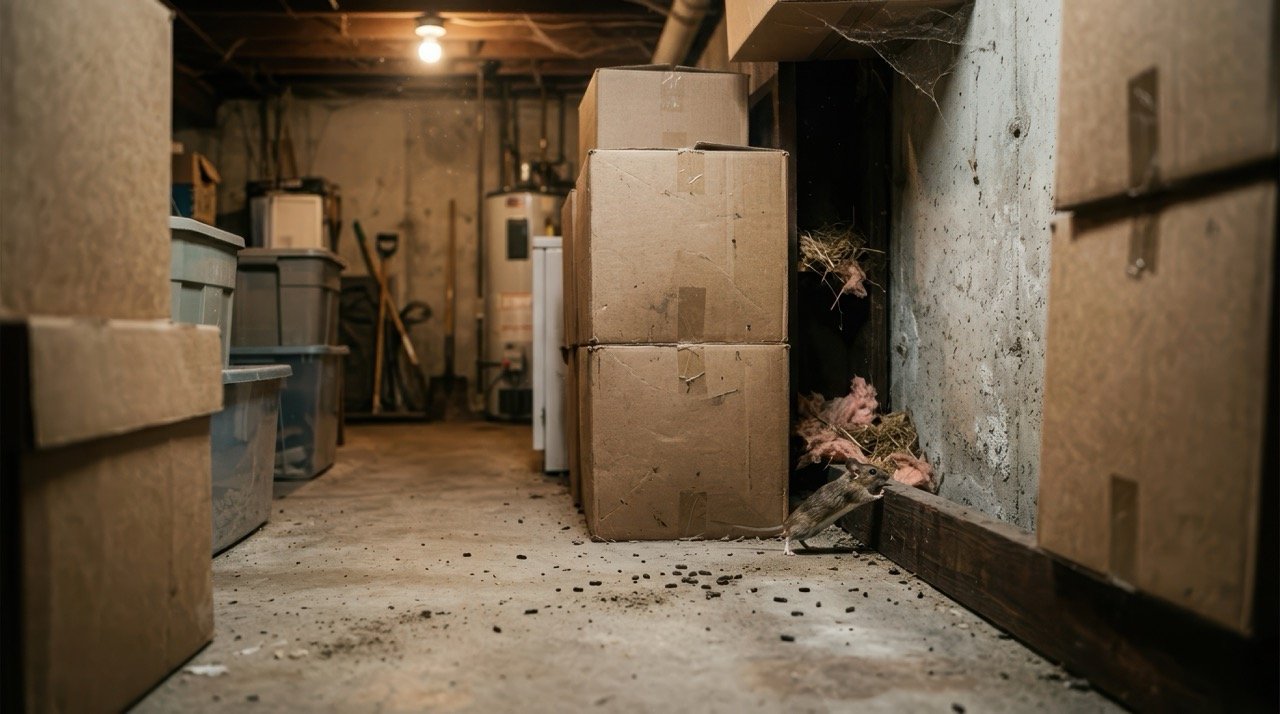
Hearing scratching sounds in the attic at night or discovering mysterious damage around your pantry can be unsettling. You may never actually see a rat or mouse, but rodents often leave behind clues that reveal their presence long before a face-to-face encounter.
Recognizing the signs of rodents in your home early can make a significant difference. Once rodents find reliable food, water, and shelter, they may establish nesting areas and become increasingly difficult to manage.
For Florida homeowners, rodents can be a concern throughout the year. Homes provide protected environments where rats and mice can find everything they need, particularly when outdoor conditions encourage them to seek shelter.
Here are some of the most common warning signs that rodents may have made their way into your property.
1. Rodent Droppings
Droppings are one of the most recognizable signs of rodent activity.
They may appear in areas where rodents travel, feed, or nest, including:
- Kitchen cabinets.
- Pantries.
- Garages.
- Attics.
- Storage rooms.
- Beneath sinks.
- Behind appliances.
Rodent droppings vary in appearance depending on the species, so professional identification can help determine what type of pest may be present.
If you discover suspected droppings, avoid handling them directly with bare hands. Proper cleanup precautions are important when dealing with areas contaminated by rodents.
2. Scratching or Scurrying Noises
Rodents are often most active when the home is quiet, which means homeowners frequently hear them at night.
You may notice:
- Scratching.
- Scurrying.
- Gnawing.
- Rustling.
- Movement above the ceiling.
These noises can come from attics, walls, ceilings, garages, or other hidden areas.
An occasional sound doesn’t necessarily confirm rodents, but repeated nighttime activity deserves investigation.
3. Gnaw Marks
Rats and mice have teeth that continuously grow, so gnawing is a natural part of their behavior.
They may chew on:
- Cardboard.
- Wood.
- Plastic containers.
- Food packaging.
- Insulation.
- Household materials.
You might first notice the problem when finding a bag of food with small holes or discovering damage to stored belongings.
Repeated or unexplained gnaw marks are an important warning sign.
4. Damaged Food Packaging
A pantry provides rodents with convenient access to food.
Signs of activity may include:
- Torn packaging.
- Small holes in bags.
- Spilled food.
- Gnaw marks on containers.
- Droppings near food storage.
Rodents can access shelves and storage areas through surprisingly small openings.
If you suspect contamination, affected food should be handled appropriately rather than consumed.
5. Nesting Materials
Rodents often build nests using soft materials they find around a property.
These may include:
- Paper.
- Cardboard.
- Fabric.
- Insulation.
- Shredded packaging.
- Other soft debris.
Nests are typically located in quiet, protected spaces where rodents are less likely to be disturbed.
Common areas include attics, garages, storage rooms, wall voids, and spaces behind appliances.
Finding shredded materials gathered together in an unusual location may indicate nesting activity nearby.
6. Grease or Rub Marks
Rodents often travel along the same paths repeatedly.
Over time, oils and dirt from their fur can leave dark marks along:
- Walls.
- Baseboards.
- Pipes.
- Beams.
- Frequently used entry points.
These marks may be more noticeable when rodent activity has been occurring for an extended period.
Combined with droppings or gnaw marks, they can provide additional evidence of an established problem.
7. Unusual Odors
Rodent activity can sometimes create noticeable odors inside a home.
A persistent musty or unpleasant smell may come from nesting areas, urine, contaminated materials, or other rodent activity.
If an odor seems strongest around a particular wall, cabinet, attic space, or storage area, further inspection may be necessary.
Unusual smells have many possible causes, so odor alone isn’t enough to confirm a rodent infestation.
8. Your Pets Are Acting Differently
Dogs and cats may detect rodent activity before homeowners do.
You might notice a pet:
- Staring at a wall.
- Pawing beneath appliances.
- Becoming unusually interested in a cabinet.
- Reacting to noises in the ceiling.
- Sniffing repeatedly around one location.
This behavior doesn’t prove rodents are present, but when combined with other warning signs, it can provide another useful clue.
9. Seeing a Live or Dead Rodent
Seeing a rat or mouse inside your home is an obvious indication of rodent activity.
However, spotting one doesn’t necessarily tell you how many are present or where they’re coming from.
Rodents generally prefer hidden environments and may spend much of their time away from people.
If you’re seeing rodents regularly—particularly during the daytime—it may indicate significant activity that should be investigated.
Where Do Rodents Hide Inside Homes?
Rodents seek spaces that offer protection and easy access to resources.
Common hiding and nesting locations include:
- Attics.
- Garages.
- Wall voids.
- Crawl spaces.
- Storage areas.
- Behind appliances.
- Cabinets.
- Utility spaces.
Attics can be particularly attractive because they’re often quiet and filled with materials that can provide shelter.
Garages also offer opportunities for entry, especially when doors, seals, or structural openings allow easy access.
How Do Rodents Get Inside?
One of the reasons rats and mice are so successful at entering homes is their ability to use small openings.
Potential access points include:
- Gaps around doors.
- Utility penetrations.
- Damaged vents.
- Roof openings.
- Garage door gaps.
- Cracks around the structure.
Rodent prevention therefore requires more than simply removing the animals you can see. Entry points must also be identified and addressed to reduce the likelihood of recurring problems.
What Attracts Rodents to Your Property?
Rodents are primarily looking for food, water, and shelter.
Common attractants around residential properties include:
- Unsecured garbage.
- Pet food.
- Bird seed.
- Food stored in garages.
- Clutter.
- Outdoor vegetation.
- Accessible water sources.
Keeping these resources under control can make your property less appealing.
Can Rodents Damage Your Home?
Rodents aren’t only a nuisance.
Their gnawing behavior can damage a variety of household materials, including insulation, wood, containers, and other building components.
They may also contaminate areas where food is stored or prepared.
The longer rodent activity continues, the greater the potential for damage and sanitation concerns.
This makes early detection especially important.
How Can You Help Prevent Rodents?
Several preventive measures can reduce your property’s vulnerability.
Seal Potential Entry Points
Inspect the exterior of your home for gaps and openings, particularly around:
- Doors.
- Garages.
- Vents.
- Pipes.
- Utility lines.
Store Food Securely
Keep pantry products, pet food, and other edible materials in properly sealed containers.
Manage Garbage
Use secure trash containers and avoid allowing food waste to remain accessible.
Reduce Clutter
Organized storage areas provide fewer undisturbed hiding places and make pest activity easier to identify.
Maintain Landscaping
Trim vegetation around the home and remove unnecessary debris that may provide outdoor shelter.
Why DIY Rodent Control May Not Be Enough
A trap may capture an individual rodent, but that doesn’t necessarily address why rodents entered the property in the first place.
Effective rodent management often requires determining:
- Which species is present.
- Where rodents are entering.
- Where they may be nesting.
- What resources are attracting them.
- Whether additional activity exists.
Without addressing these factors, new rodents may continue entering even after others are removed.
When Should You Call a Pest Control Professional?
If you’re finding multiple signs of rodents in your home, professional inspection can help determine the extent of the problem.
Consider seeking professional assistance if:
- You repeatedly hear noises in walls or ceilings.
- Droppings continue appearing.
- You find damaged food packaging.
- You suspect rodents are in the attic.
- You see live rodents.
- The problem returns after DIY efforts.
A pest control professional can inspect the property, identify potential access points, and recommend an appropriate strategy based on the situation.
Don’t Ignore the Early Signs of Rodents
Rodents are good at remaining hidden, which means the evidence they leave behind is often your first warning.
Droppings, scratching noises, damaged packaging, nesting materials, and gnaw marks are all signs of rodents in your home that deserve attention.
Identifying the problem early and addressing both the rodents and the conditions that allowed them inside can help protect your property from recurring activity.
Contact 911 Home Helps Today
Hearing scratching in the attic or finding suspicious signs around your home? 911 Home Helps can help determine whether rodents are responsible and identify potential problem areas around your property.