Key Takeaways
● South Florida is home to three rat species: the roof rat, Norway rat, and Florida wood rat, each with distinct looks, habits, and hiding spots.
● Roof rats are slender climbers with tails longer than their bodies, commonly nesting in attics and palm trees while feeding on fruits and vegetation.
● Norway rats are larger, heavy-bodied rodents with shorter tails that burrow in the ground and are often found near foundations, garbage areas, and waterways.
● Florida wood rats are native, medium-sized rodents with furry tails that prefer natural habitats and rarely invade urban homes in South Florida.
● 911 Home Helps provides expert rodent identification and removal services tailored to the unique pest challenges of South Florida.
South Florida Has 3 Main Rat Species You Need to Know
The three rats you’re most likely to encounter in South Florida are the roof rat (Rattus rattus), the Norway rat (Rattus norvegicus), and the Florida wood rat (Neotoma floridana). Each one occupies a different niche, from your attic rafters to underground burrows to dense natural vegetation.
Understanding these three species directly affects where you place traps, what bait you use, and how you seal your home. Let’s break down each species in detail so you know exactly what you’re up against.
911 Home Helps: Miami’s Most Trusted Pest Control Experts!
Family-Owned Excellence | 4.9★ Google Rating

Protect Your Home & Family: Comprehensive pest elimination for homes and businesses in Miami-Dade and Broward Counties. From termites to mosquitoes, we deliver fast, effective solutions with honest pricing and clear communication every step of the way.
Why Choose Us:
- ✓ Free inspection and consultation, no obligations
- ✓ Tent & tentless termite treatments (Drywood, Subterranean & Formosan)
- ✓ Comprehensive rodent, roach, and mosquito control
- ✓ TAP Insulation for year-round energy savings
- ✓ Family-owned with trained, certified technicians
Your home deserves protection you can trust. We’re local, fast, and always transparent.
1. Roof Rat (Rattus rattus)
Also known as the black rat, ship rat, palm rat, or fruit rat, the roof rat is responsible for the vast majority of rat infestations in homes across Miami-Dade, Broward, and Palm Beach counties.
Physical Appearance & Size
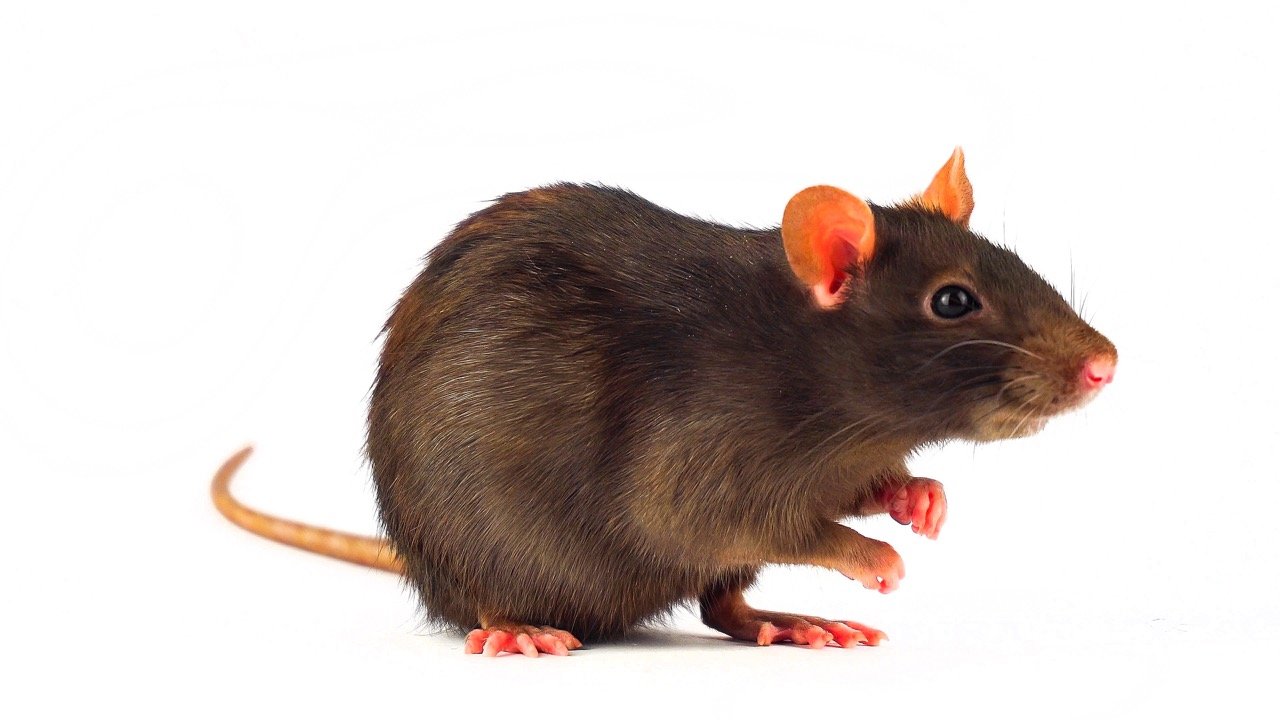
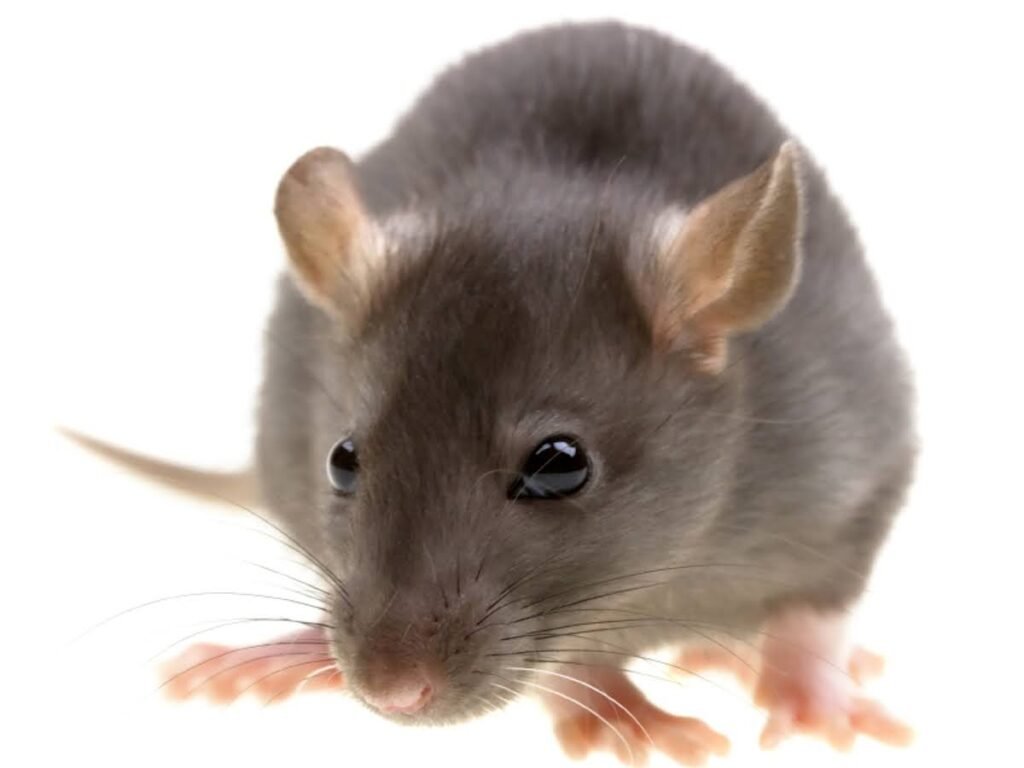
Roof rats have a sleek, slender build with large ears, a pointed snout, and prominent eyes. Their bodies measure roughly 6 to 8 inches in length, but their tail, which is longer than their body, adds another 7 to 10 inches. Adults typically weigh between 5 and 9 ounces. Their fur is usually dark brown to black on top with a lighter gray or cream-colored underside.
One of the easiest ways to identify a roof rat is by its tail length. If the tail is longer than the body, you’re almost certainly looking at a roof rat. Their feet are also notably large relative to their body, built for gripping and climbing.
Behavior & Habitat in South Florida
True to their name, roof rats love elevation. They are exceptional climbers, using tree branches, utility lines, and vines to access rooftops and then working their way into attics, wall voids, and upper cabinets. In South Florida, palm trees are a particularly common highway; roof rats nest in the dense fronds and use overhanging branches to leap directly onto rooflines.
Their diet skews heavily toward fruits, nuts, seeds, and vegetation. Citrus trees, avocados, and coconut palms are magnets for these rats, which is why they’re also called “fruit rats” or “citrus rats” throughout Florida.
Droppings, Grease Marks, & Other Signs
Roof rat droppings are approximately ½ inch long, with pointed ends and a banana-like curved shape. You’ll typically find them concentrated along rafters, in attic insulation, near entry points in the roofline, or along fence tops and tree branches they travel regularly.
Along frequently used pathways, roof rats leave greasy smear marks from the oils in their fur; look for dark, dirty streaks along beams, pipes, and wall edges.
2. Norway Rat (Rattus norvegicus)
While the Norway rat is more commonly associated with New York City’s sewers, it does occur in South Florida, particularly in areas with dense urban development, waterfront properties, and commercial districts.
Physical Appearance & Size
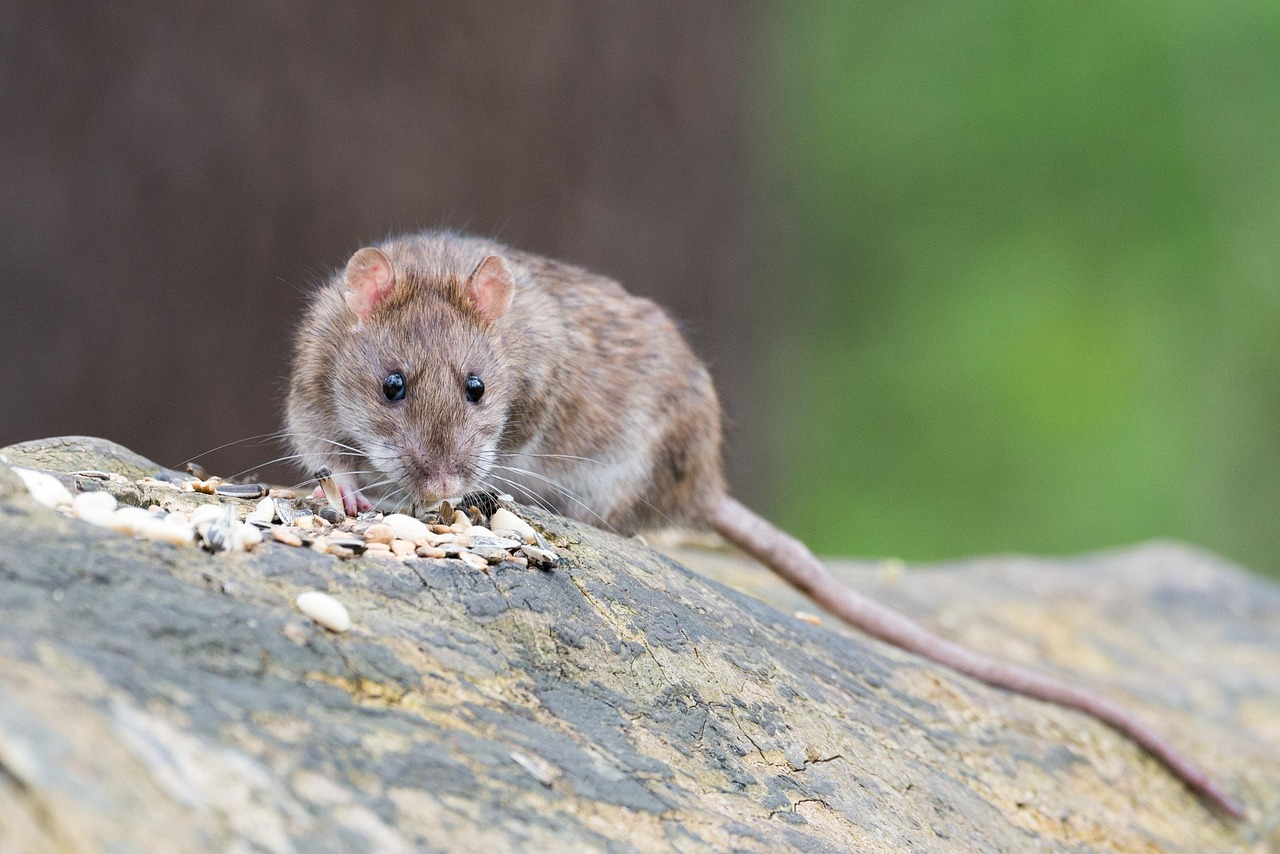
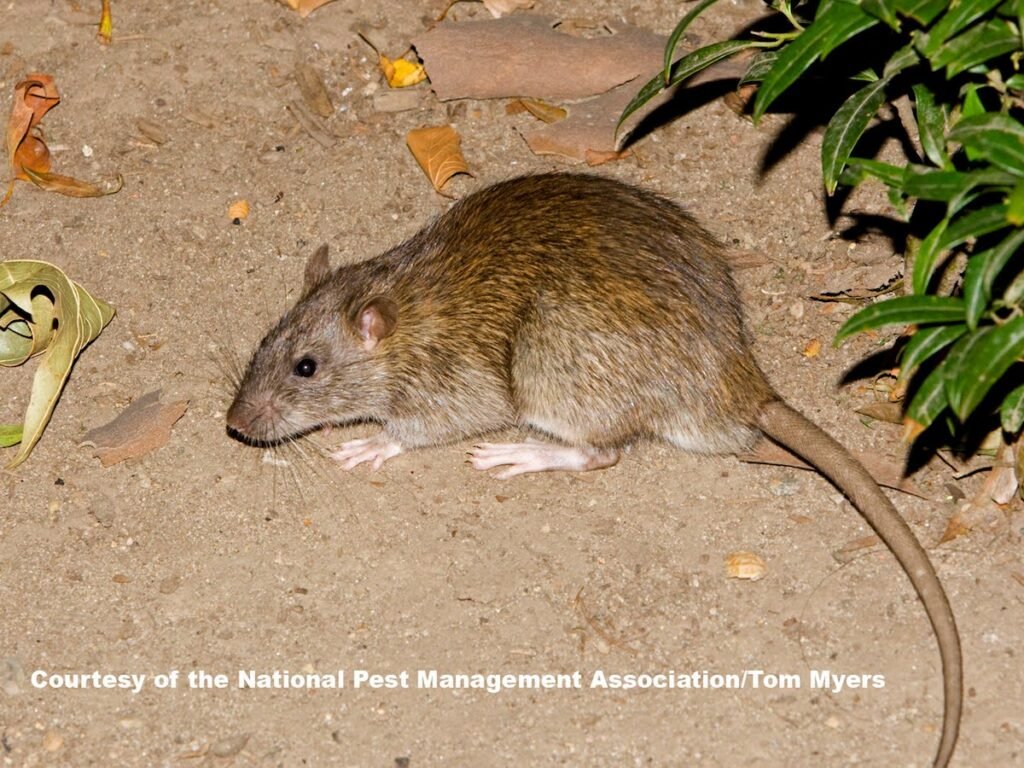
Norway rats are substantially larger than roof rats. Their bodies alone can reach 10 inches, with a thicker, heavier build that can tip the scales at up to 1 pound. The tail is shorter than the body, a key distinguishing feature, and their snout is blunt and rounded rather than pointed.
Their fur is coarse, typically brown or gray on top, with a pale gray underside. Their ears are small and close-set, and they have notably smaller eyes than roof rats.
Behavior & Habitat in South Florida
Norway rats are ground dwellers through and through. They burrow into soil along building foundations, under concrete slabs, near garbage areas, and along riverbanks or canal edges, all of which are extremely common landscape features in South Florida. Unlike roof rats, they are not climbers by nature and rarely venture above the ground floor of a structure.
They are opportunistic omnivores with a preference for meat, fish, grains, and garbage, making restaurant dumpsters, marinas, and food storage facilities particularly attractive targets.
Droppings, Burrows, & Other Signs
Norway rat droppings are noticeably larger than those of roof rats; roughly ¾ inch long, with blunt, capsule-like ends rather than pointed tips. Finding these near ground level, such as along walls, behind appliances, or near garbage bins, is a strong indicator of Norway rat activity rather than roof rat activity.
Their burrows are one of the most distinctive signs of a Norway rat problem. Look for smooth, clean-edged holes about 2 to 3 inches in diameter, typically dug along the base of walls, under slabs, or in garden beds. Active burrows will have freshly disturbed soil and no cobwebs at the entrance.
3. Florida Wood Rat (Neotoma floridana)
While the Florida Wood rat occasionally creates problems for homeowners in rural or semi-rural settings, it rarely invades urban homes the way its two counterparts do.
Physical Appearance & Size
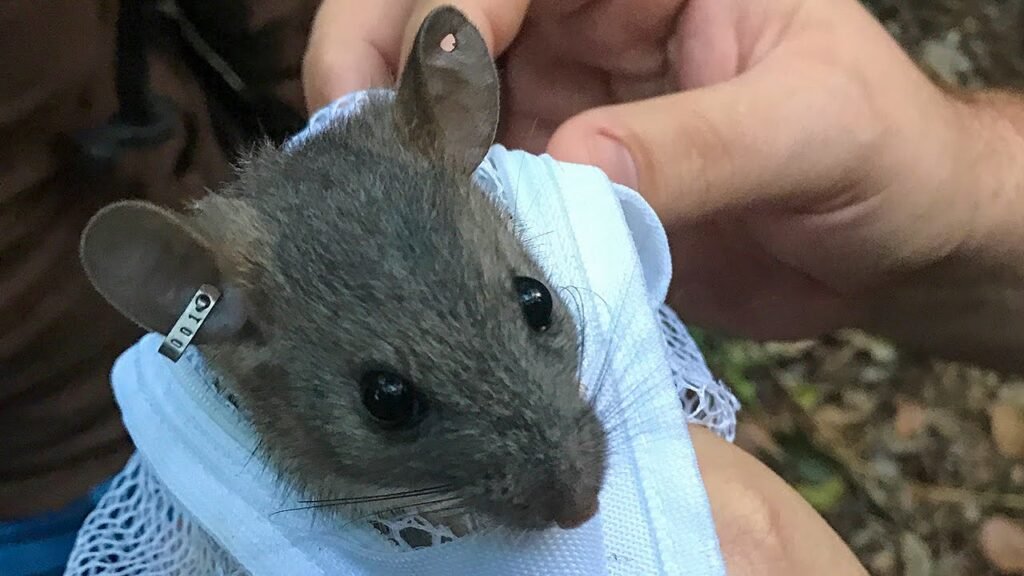
Florida wood rats are native to Florida, unlike the Norway and roof rats, which are both invasive species originally from Asia. They are medium-sized rodents with bodies ranging from 6 to 8 inches long, plus a shorter, distinctly hairy tail, unlike the long, scaly tail you’d see on a roof or Norway rat.
Their fur is soft and gray-brown on top, white on the underside, and white on the feet. They have large, rounded ears and relatively large black eyes, giving them a noticeably different, almost gentle appearance compared to other rat species. If a rat you’ve spotted looks more like an oversized mouse with big ears and a fuzzy tail, it’s likely a wood rat.
Why Wood Rats Are Rare in South Florida
Wood rats strongly prefer dense, undisturbed natural habitats, hardwood hammocks, scrublands, and brushy areas with plenty of cover. South Florida’s highly urbanized landscape leaves little room for them in areas like Miami or Fort Lauderdale.
They are primarily found in the more rural pockets of northern and central Florida, and their presence in South Florida is largely confined to preserved natural areas, such as the edges of the Everglades and rural Collier County.
They are also known for building elaborate stick nests, sometimes several feet wide, around the base of trees or in dense brush, which is one of the clearest signs of their presence if you live near natural land.
How to Tell These 3 South Florida Rats Apart
Body Size & Tail Length Comparison
Tail length is your fastest visual identifier. Roof rats have tails longer than their bodies, a dead giveaway. Norway rats have tails noticeably shorter than their thick, heavy bodies. Florida wood rats have shorter, distinctly furry tails that look nothing like the long, scaly tails of the other two species.
In terms of overall size, Norway rats are the largest, followed by roof rats, with wood rats in a similar size range but with a visibly softer, rounder appearance.
Where in Your Home Each Rat Hides
Location within your home is arguably the single most useful clue. Roof rats are almost always found in high areas, such as attics, ceiling voids, upper walls, and inside palm trees or roof overhangs. If the scratching you hear at night is coming from above your head, roof rats are the primary suspect.
Norway rats, on the other hand, stay at ground level or below it. Burrows near the foundation, activity behind ground-floor appliances, and damage near floor-level entry points all point to Norway rats. Florida wood rats, if they appear at all, will almost always be found outdoors in brush piles, wood stacks, or natural vegetation rather than inside a finished home.
Dropping Shape & Size Differences
Roof rat droppings are approximately ½ inch long with pointed, spindle-shaped ends. Norway rat droppings are larger at ¾ inch with blunt, rounded ends. Florida wood rat droppings are similar in size to roof rat droppings but tend to be more oval and compact.
If you find droppings, measuring them and noting the end shape takes about 10 seconds, and immediately narrows your suspect list significantly.
Top 3 Rat Species Found in South Florida: Summary Table
| Features | Roof Rat | Norway Rat | Florida Wood Rat |
|---|---|---|---|
| Scientific Name | Rattus rattus | Rattus norvegicus | Neotoma floridana |
| Origin | Invasive (Asia) | Invasive (Asia) | Native to Florida |
| Body Size | 6–8 inches, 5–9 oz | Up to 10 inches, up to 1 lb | 6–8 inches |
| Tail | Longer than the body, scaly | Shorter than the body, scaly | Shorter, distinctly furry |
| Appearance | Sleek, large ears, pointed snout, dark brown/black fur | Thick & heavy, small ears, blunt snout, brown/gray fur | Soft gray-brown fur, white belly & feet, large, rounded ears |
| Droppings | ~½ inch, pointed/curved ends | ~¾ inch, blunt/capsule-shaped ends | ~½ inch, oval and compact |
| Prevalence in South Florida | Very common; #1 home invader | Less common; mostly urban/waterfront areas | Rare; mostly rural/preserved natural areas |
| Key Identifier | Tail longer than body | Largest of the three; burrow holes near foundations | Fuzzy tail, gentle appearance, large stick nests |
Protect Your South Florida Home From Rats With 911 Home Helps

We understand the conditions that make South Florida a hotspot for rat activity, including year-round warmth, fruit trees, and dense vegetation that allow infestations to grow quickly if left unchecked.
At 911 Home Helps, we use a proven 3-step process with free inspections, targeted treatments, and entry point sealing for long-term results. We also offer sanitation and insulation services. Call us at (786) 269-6959 for reliable rodent control now.
Schedule Your Free Inspection Today →
Frequently Asked Questions (FAQs)
What are the most common types of rats in South Florida?
South Florida has three main rat species: the roof rat, the Norway rat, and the Florida wood rat. The roof rat is by far the most frequently encountered in residential settings across Miami-Dade, Broward, and Palm Beach counties due to its preference for warm, high spaces and the region’s abundance of fruit trees.
How can I tell if rats are in my attic or walls?
Listen for scratching or scurrying sounds overhead at night, which typically indicate the presence of roof rats. Check your attic for banana-shaped droppings about half an inch long, shredded insulation used as nesting material, greasy smear marks along beams and rafters, and gnaw marks on wood or wiring. These are all reliable signs of an active roof rat infestation.
Are rats in South Florida dangerous to my health?
Yes. Both roof rats and Norway rats can carry diseases such as leptospirosis and murine typhus, which can spread through urine, droppings, and fleas. Accumulated waste in enclosed areas, such as attics, can also trigger asthma and allergic reactions when disturbed, even without direct contact with the rodents themselves.
Why should I hire 911 Home Helps for rodent control?
911 Home Helps brings over 10 years of local rodent control experience in Miami-Dade County. Our team uses a comprehensive 3-step process: free inspection, targeted treatment, and add-on sanitation services to remove active rodents and eliminate the conditions that attract them. We understand the specific species and environmental factors unique to South Florida, ensuring effective, long-lasting results for your home or business.
*Disclaimer: Results may vary depending on the severity of the infestation and the property’s condition. Pricing varies by service type and property size. Contact 911 Home Helps for a free inspection and personalized quote.